No Results Found
The page you requested could not be found. Try refining your search, or use the navigation above to locate the post.

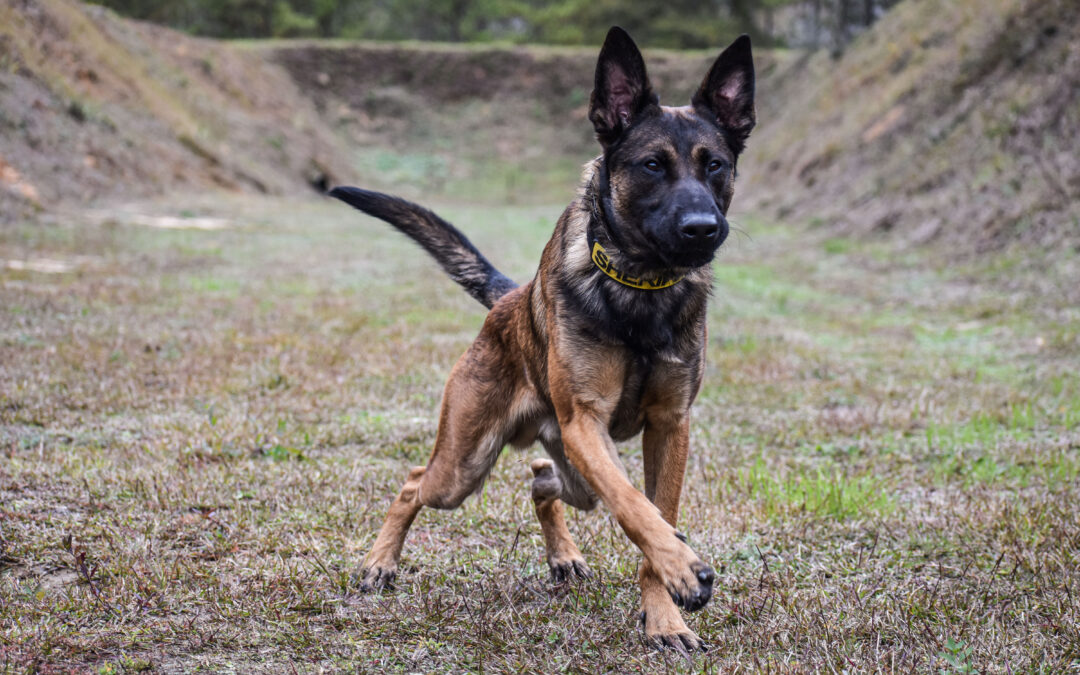
Written by Christie Solomon | Photography by Christie Solomon and Courtesy of WCSO
Originally Published in Dog-Harmony Life Fall 2021 Issue
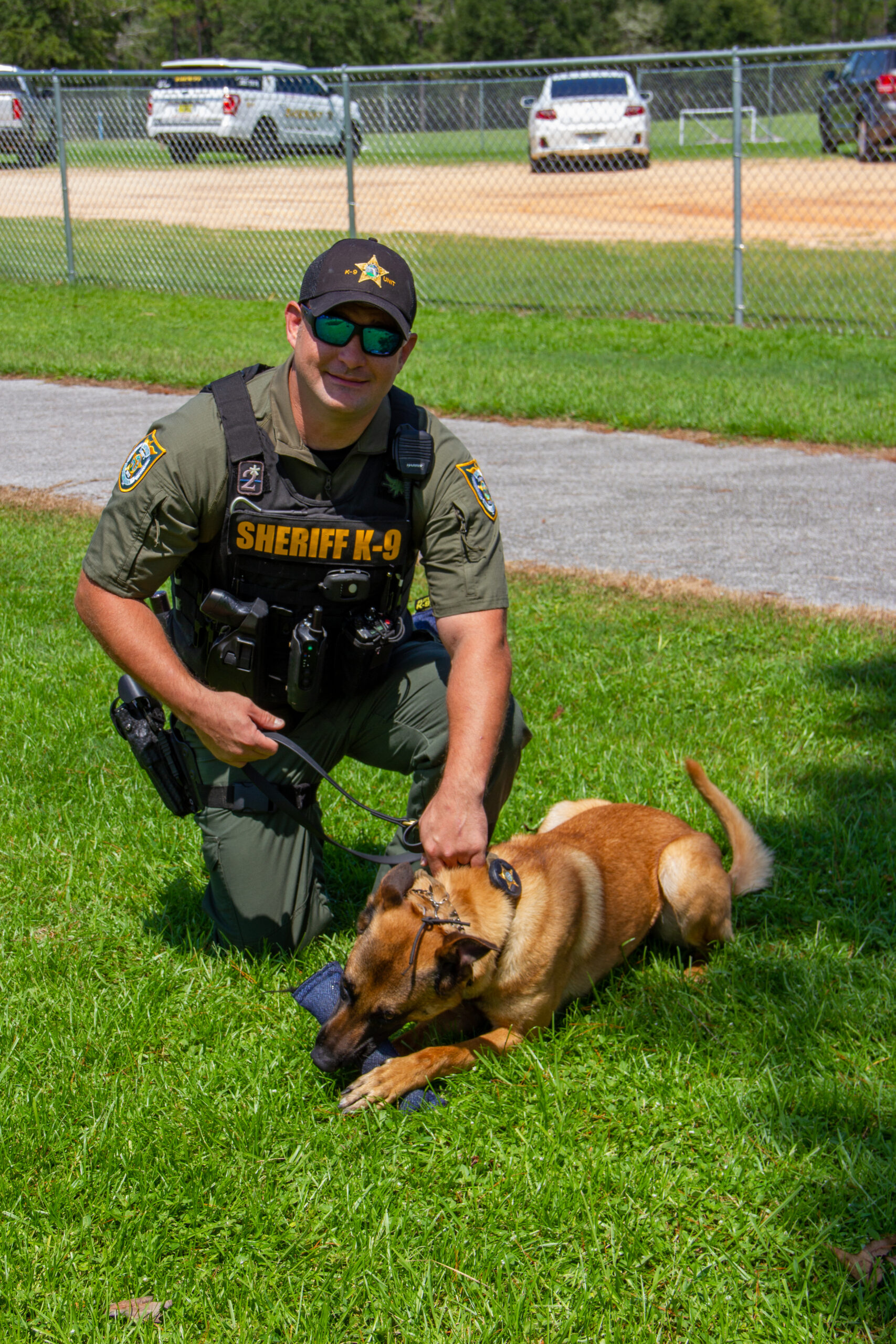
We were surrounded by three Sheriff’s Deputies with three highly trained K-9s, a Lieutenant, and a Public Information Officer from Walton County’s Sheriff’s Office. After the fear dissipated, we were able to get a sense of these amazing K-9 teams’ unique personalities and their roles through off-leash demonstrations. We had not expected the depth of the connection and bond between the dog and its handler.
Each of the three K-9 handlers in the Walton County Sheriff’s Office (WSCO) individually selected their canine partners as young dogs and have trained them from the beginning. The breeder is instrumental in the K-9 selection process to ensure the dogs have the appropriate temperaments to perform their duties.
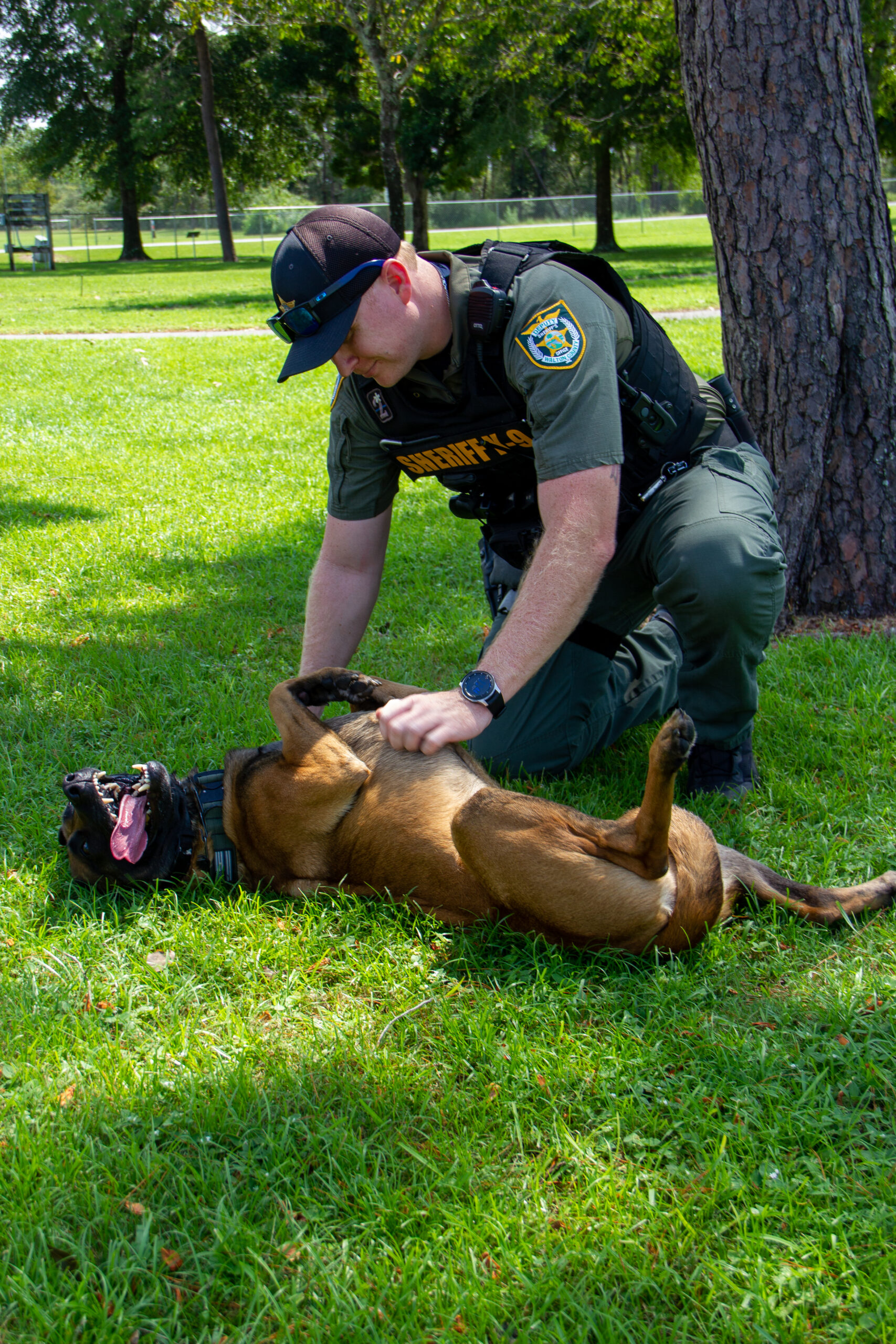
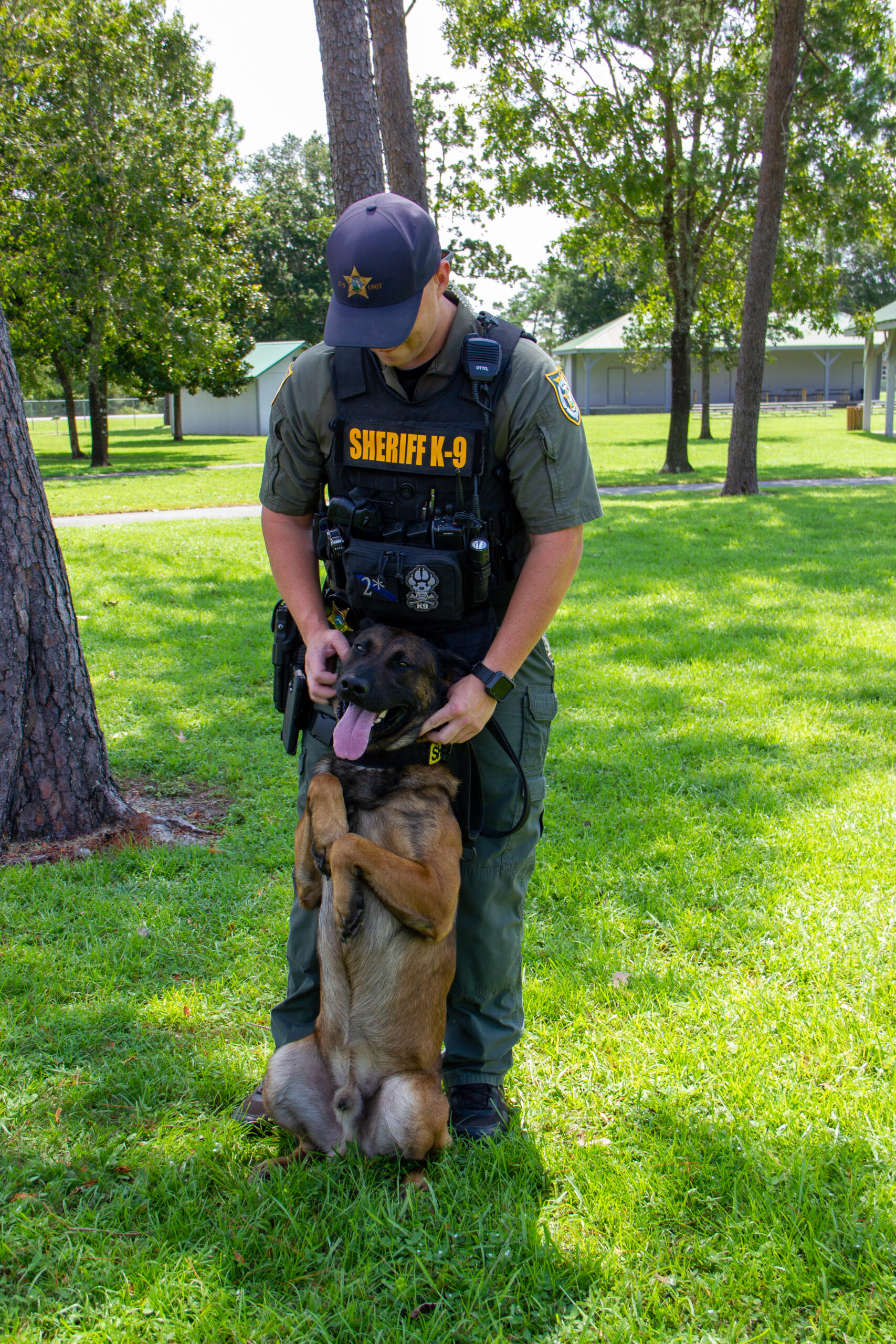
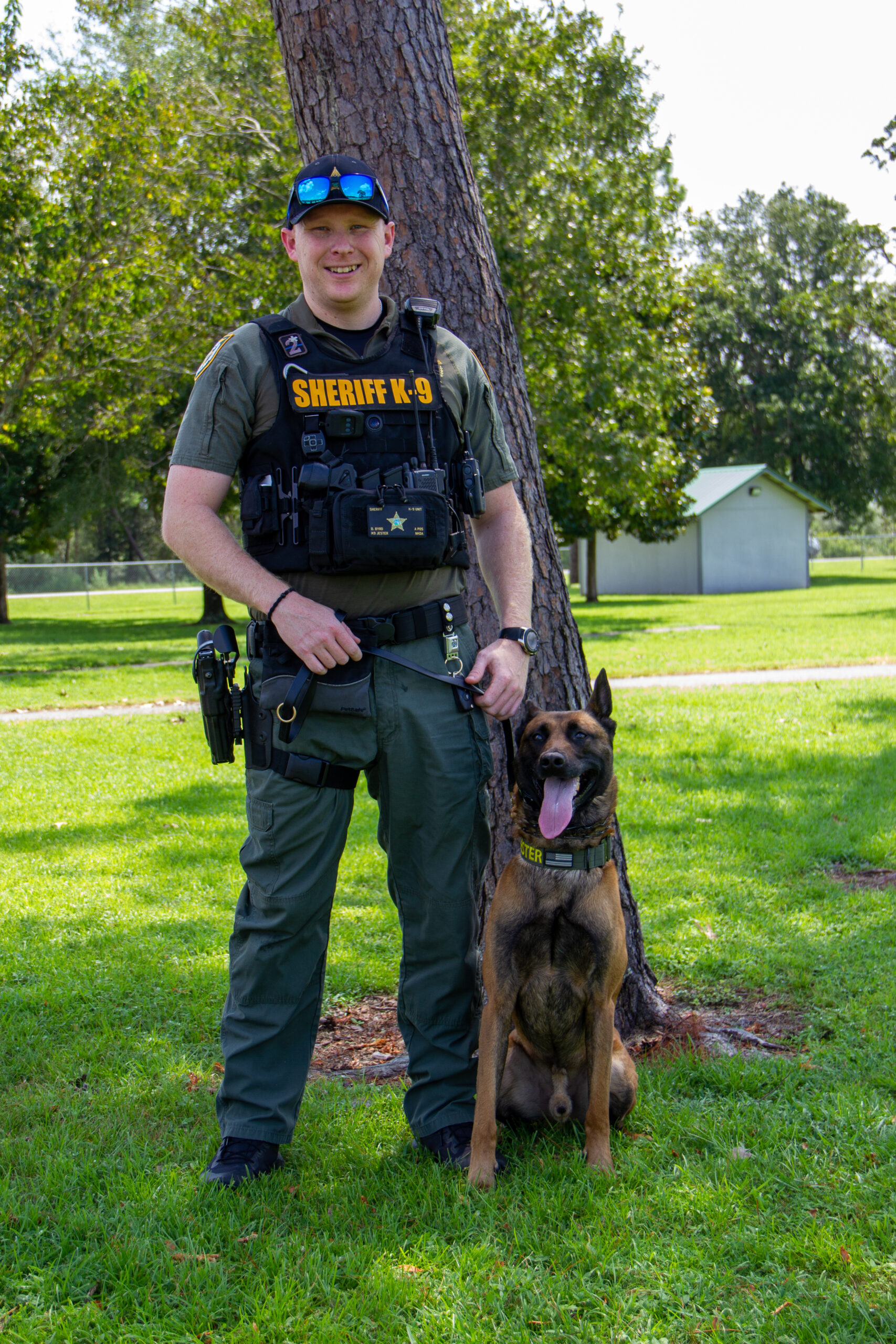
Jester is a Belgian Malinois born in May 2016 in the Netherlands and is the most tenured of the WCSO K-9s. Jester began his career with the WCSO in September 2017 with senior handler Deputy Damon Byrd.
Byrd traveled to Oxford, Florida, and selected Jester as his K-9 partner from Police Service Dogs, WCSO’s vendor/breeder. Jester is a dual-purpose working dog certified in narcotics detection and patrol through both the Florida Department of Law Enforcement (FDLE) and United States Police Canine Association (USPCA).
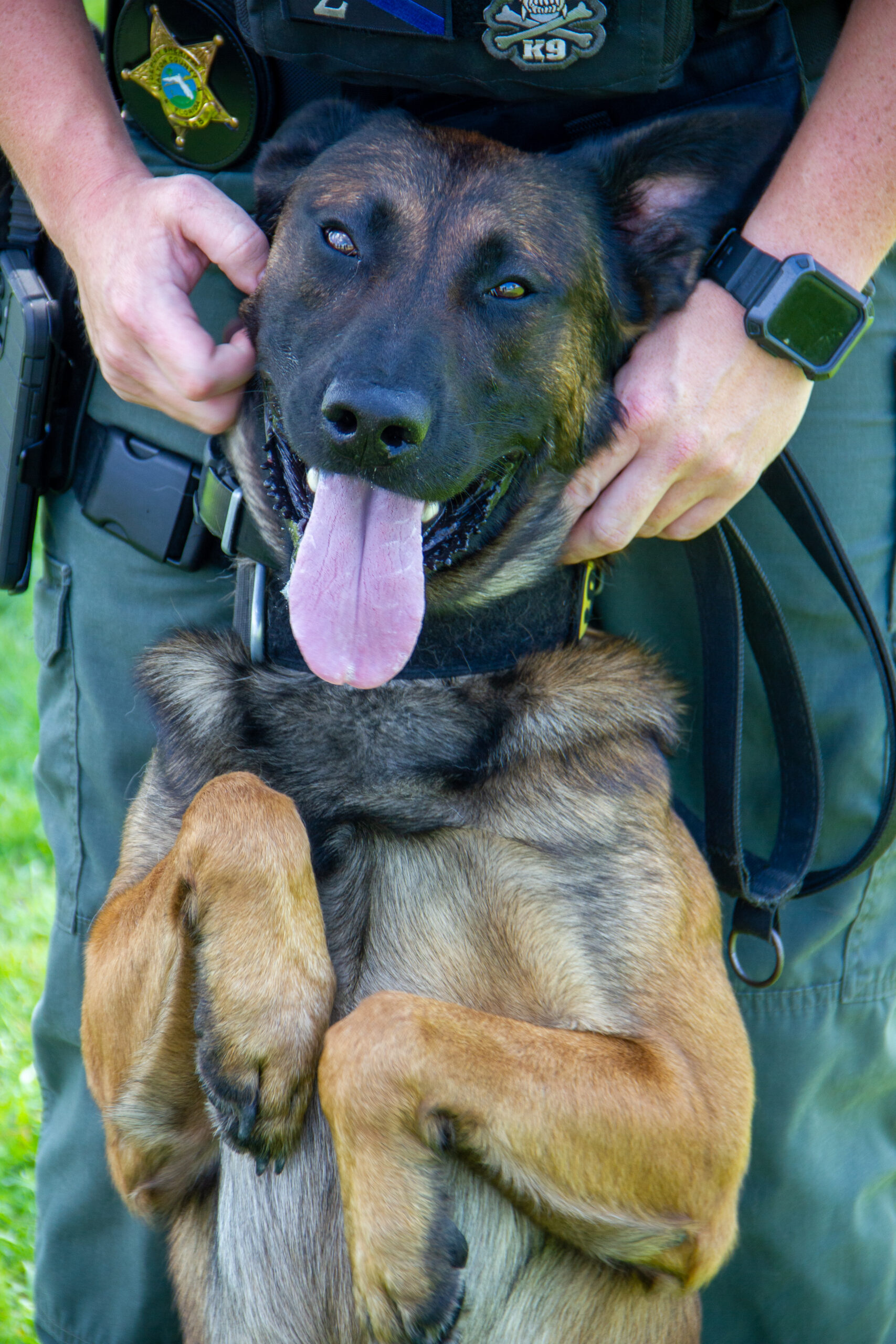
Byrd and Jester gave the group an off-leash demonstration of Jester’s abilities. Jester, completely in-tune with Byrd, responded almost instantaneously to both hand signals and verbal cues in Dutch. Byrd rewarded Jester with high-quality kibble after each response. After Jester gave an impressive performance of his abilities, he rolled over for a smile from Byrd and a well-deserved belly rub.
“Jester has been on the road for the longest, then Colt, and then Jax. Jester is completely obsessed with Deputy Damon Byrd. He will listen to Damon and do whatever is requested of him because they’ve been together the longest. Colt is the second most tenured, followed by Jax, a nearly two-year-old Belgian Malinois. Jax is demonstrating a high drive and is still learning a lot in his first year with handler, Deputy Steven Tector.”
– Corey Dobridnia, Public Information Officer, WCSO
(We did notice that Jax was very skilled at pulling not one, but two, chew toys out of Deputy Tector’s pockets.)
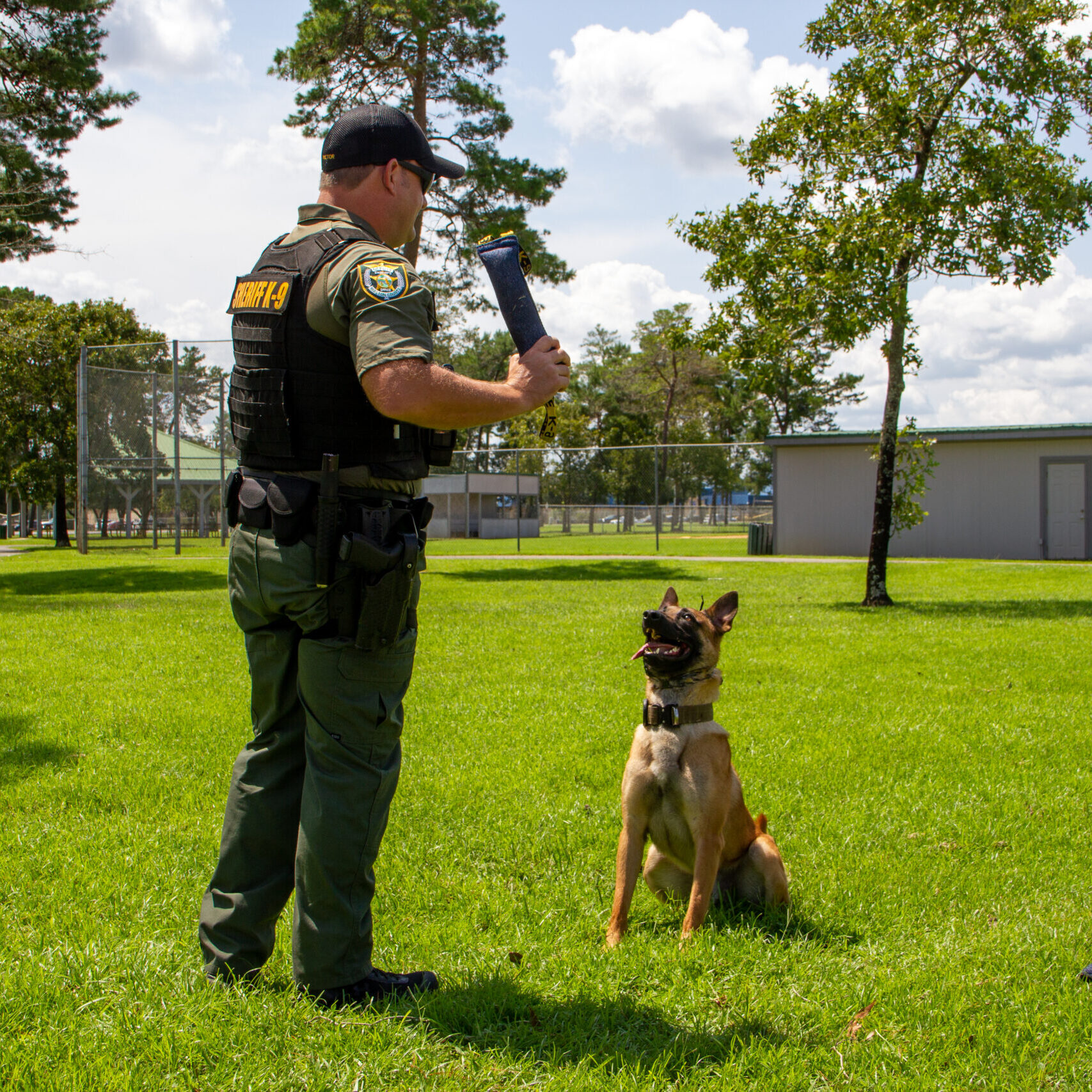
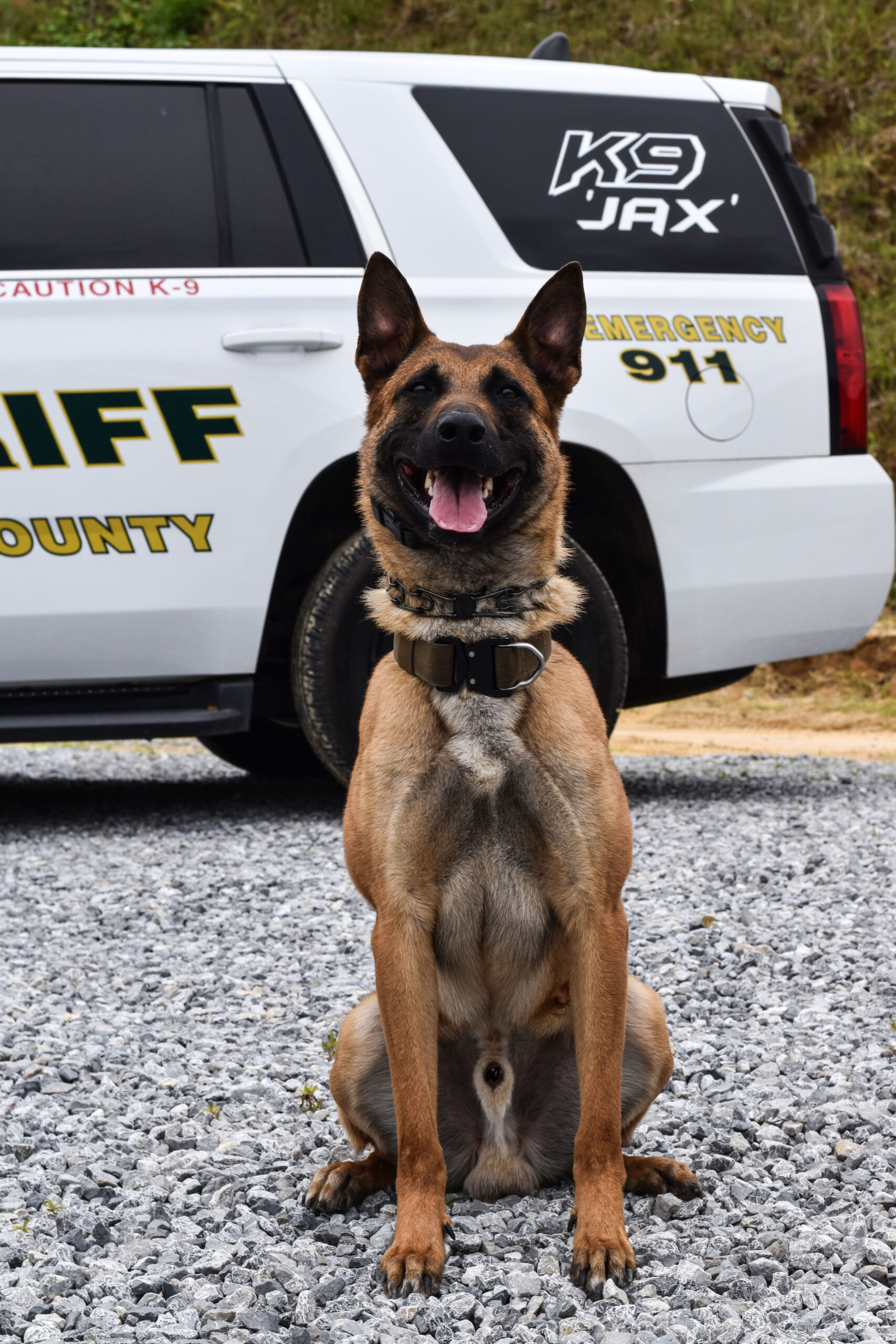
Jax is a Belgian Malinois born in Hungary in December 2019 and a multi-purpose K-9 officer at the WCSO. He is certified in narcotics detection, criminal apprehension, tracking, and evidence/article recovery.
As the newest member of the K-9 Unit, Jax completed the FDLE’s 480-hour Basic Patrol K-9 Handler Course in May 2021 with Deputy Tector.
This highly trained, good-looking pup who’s on standby to work enjoys a game of fetch in his downtime. If you’re lucky enough, this large dog will catch you off-guard by a not-so-subtle body lean, which is his way of displaying affection.
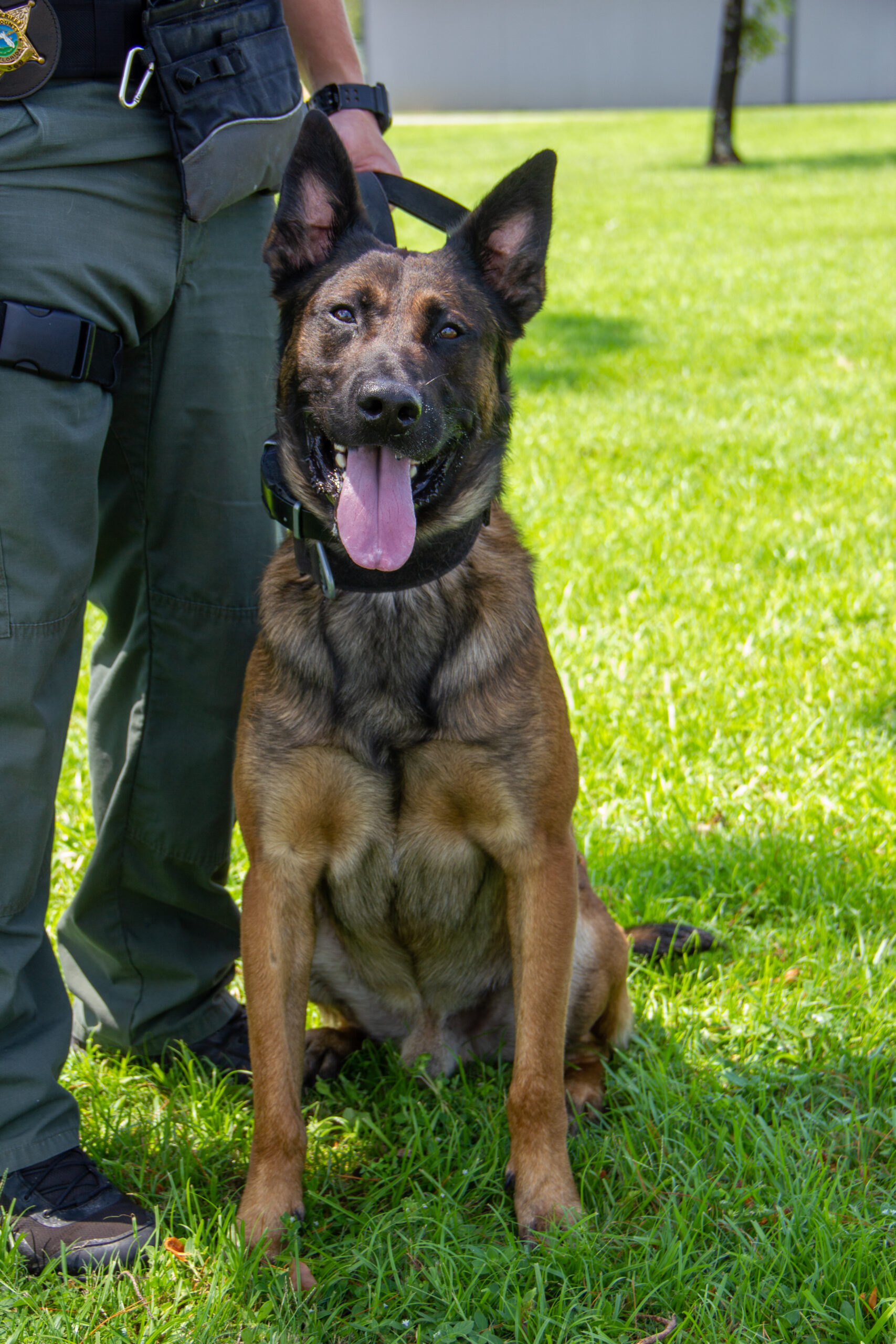
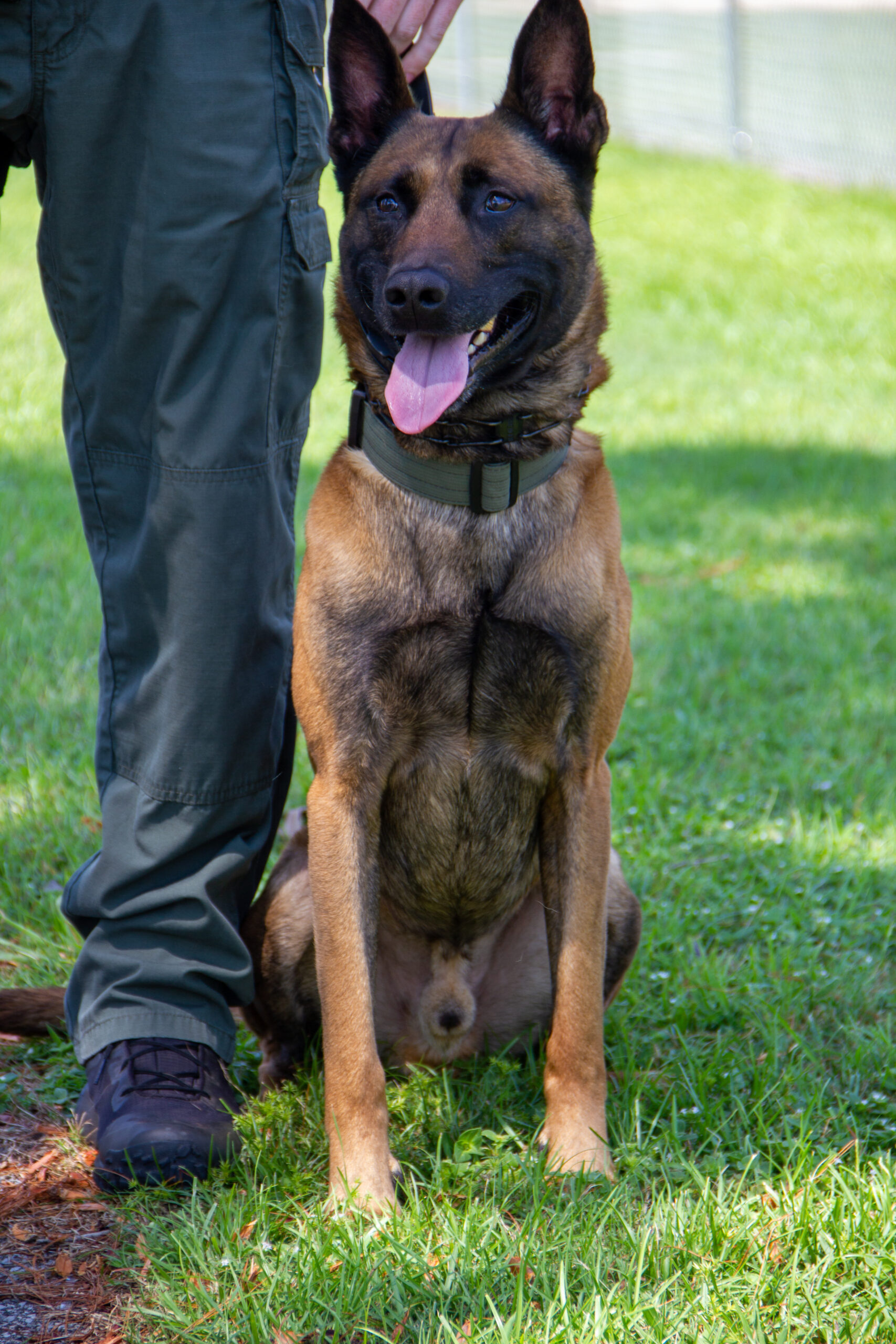
Colt is a single-purpose Belgian Malinois/Shepherd mix born in the Netherlands and certified in narcotics detection through the USPCA.
Deputy John Avery selected Colt as his partner and welcomed him into his home and family, which includes two small children.
Explaining the selection process for Colt’s role at the WCSO, Avery said, “his only job is to find drugs. Knowing that, we not only wanted to select a dog great at scent detection, but also great with kids and people in general. We wanted a very social dog.”
Like Jax, Colt has a fondness for chew toys and knows exactly which of Avery’s pockets to pick.
Reward-based training is the main methodology utilized by the WCSO K-9 Unit. This training approach builds trust and a strong bond between the handler and the canine for effective police work. According to senior handler, Deputy Damon Byrd, “our dogs have never eaten out of a dog bowl. We reward them with food out of our hands every time they do something good.”
“When we teach evidence and article recovery, we use kibble on our tracks. In order to accelerate their food drive a little bit, we’ll microwave little hot dogs. That scent alone puts them into overdrive.” – Deputy Byrd
Byrd said that, “outside of apprehension work, we don’t activate electronic collars on our dogs. We make eye contact and mainly use verbal cues and hand signals.” When the K-9 Unit is in a SWAT situation, the handlers may not have a visual on the dogs or be able to call them. Electronic collars are used in these situations only with a subtle vibration to discreetly cue the dogs. Speaking proudly about his K-9 partner, Byrd said, “Jester has never failed to engage” a suspect.
According to Byrd, prong collars are used only as a last resort, a correctional tactic when the dogs are working. Dog-Harmony believes electronic and prong collars should not be used on your average companion animals, who are not working animals paired with highly skilled handlers.
After a hard day’s work, all three of the K-9s, Jester, Colt, and Jax, sleep at home with their handlers. Rumor has it that one of these clever canines even shares the bed with his handler at night. The off-duty time at home not only serves as a time for the pair to bond, but also allows the K-9 Unit to respond to calls more quickly. Interacting with these three dogs and their handlers, who all failed to hide smiles when looking at their K-9 partners, revealed the deep level of respect and affection each of these pairs has for each other.
On September 1, 2021, Lieutenant Scott Hogeboom took responsibility for the K-9 unit. (Coincidentally, Lt. Hogeboom is married to the Commander of Walton County’s Animal Services division, which Dog-Harmony supports with its Shelter Enrichment Program.) Hogeboom plans to add additional K-9s to the WCSO unit as funding is made available.
Santa Rosa County, which is located nearby in the northwest panhandle of Florida, covers a territory similar in size to Walton County (~1,200 mi2). These counties span the Gulf Coast to the southern border of Alabama. The Santa Rosa County Sheriff’s Office currently has thirteen working dogs (versus the three at the WCSO).
A $40,000 donation to the WCSO K-9 Unit from the Sassy Sister Women’s Club of Santa Rosa Golf & Beach Club in April 2021 will go towards additional training, equipment, and even dogs for the WCSO. Each new K-9 costs an average of $20,000. In addition, the K-9 teams require special equipment, as well as a vehicle equipped for K-9 transport, food, and medical care while in service. Bluewater Bay Animal Hospital, which cares for the dogs during their career, also continues to cover medical expenses for retired K-9s, all of whom have been formally adopted by their handlers. The initial cost for adding a K-9 to the agency’s team is $80,000 to $100,000.
Our area needs to support the growth and training of this highly skilled K-9 Unit. To donate or to learn more about how you can help the WCSO K-9 Unit, please contact Corey Dobridnia, Public Information Officer of the WCSO (at 850-951-4759 or cdobridnia@waltonso.org). If you’re not a resident of Walton County, consider contacting your local county’s Sheriff’s Office to see how you can get involved.
Dog-Harmony is a 501(c)(3) dedicated to reducing the shelter population through ongoing community education and programs that enrich the human and animal bond.
©2015-2025 Dog-Harmony, Inc. | 501(c)3 Charitable Education Non-Profit | Privacy Policy | Powered by Creative Web Solutions
Written by Kay Graves
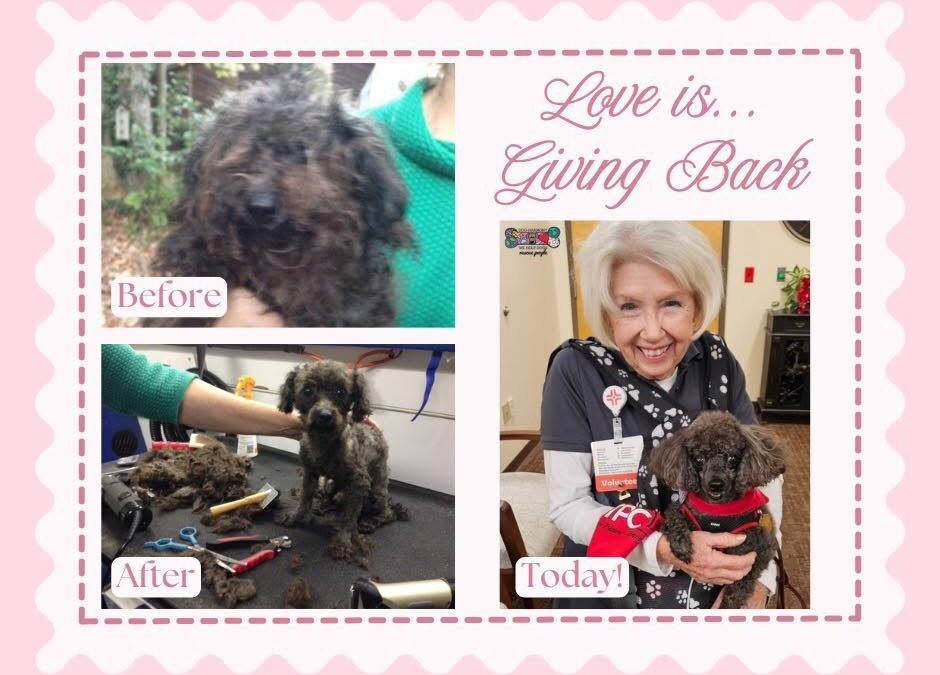
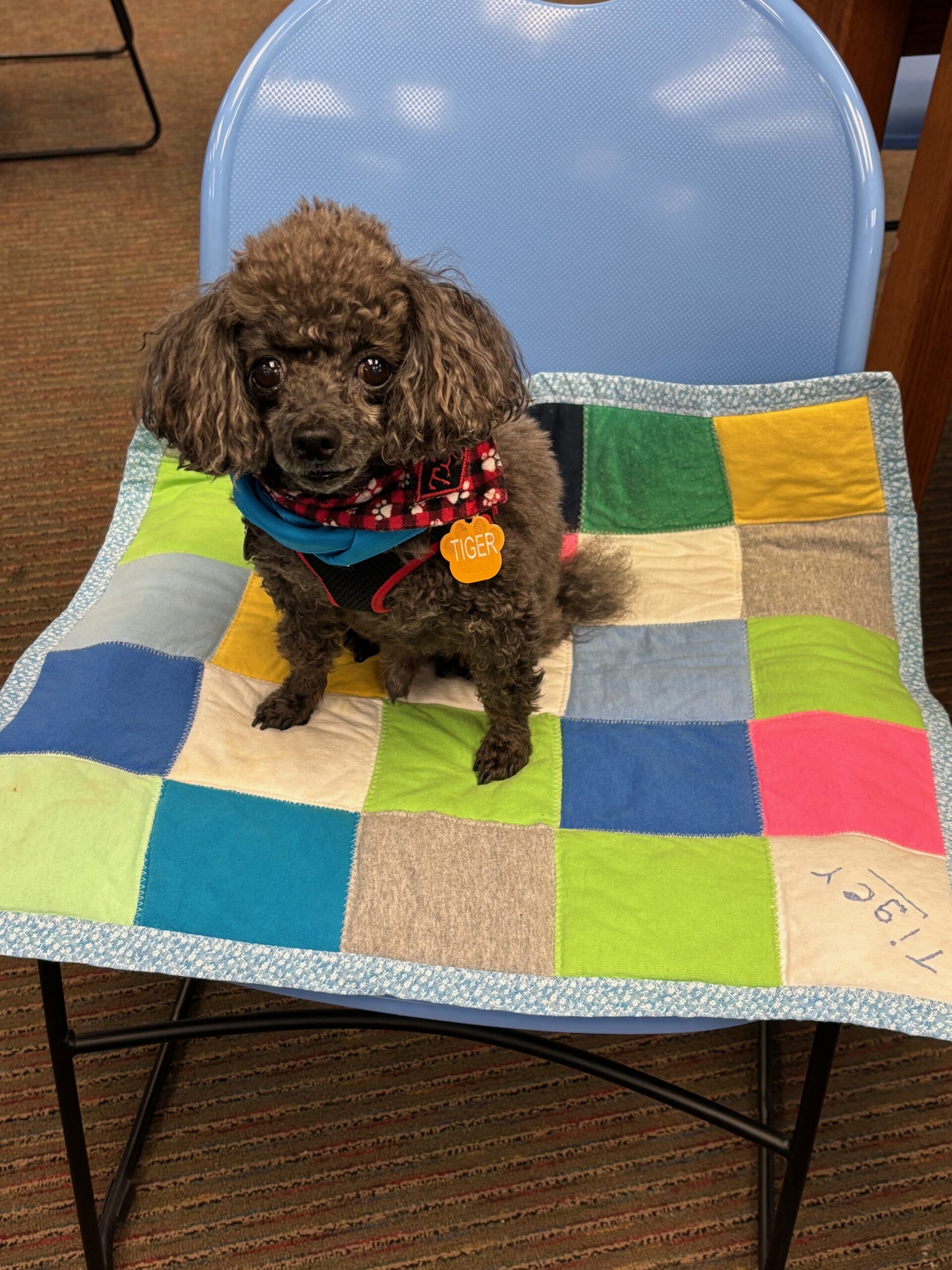
We rescued Tiger in 2015 at Our Pal’s Place in Marietta, GA. He was approximately one year old. I had two older dogs at the time. Had it not been for Charley’s loving care, I am not sure Tiger would have made it. It took about 2 years for Tiger to adjust (calm).
We trained with Dog-Harmony to become a therapy dog team. We now volunteer at HCA Florida Fort Walton-Destin Hospital and Lotus Learning & Arts Center. We walk with the Dog-Harmony’s therapy dog teams at HCA and greet staff and patients.
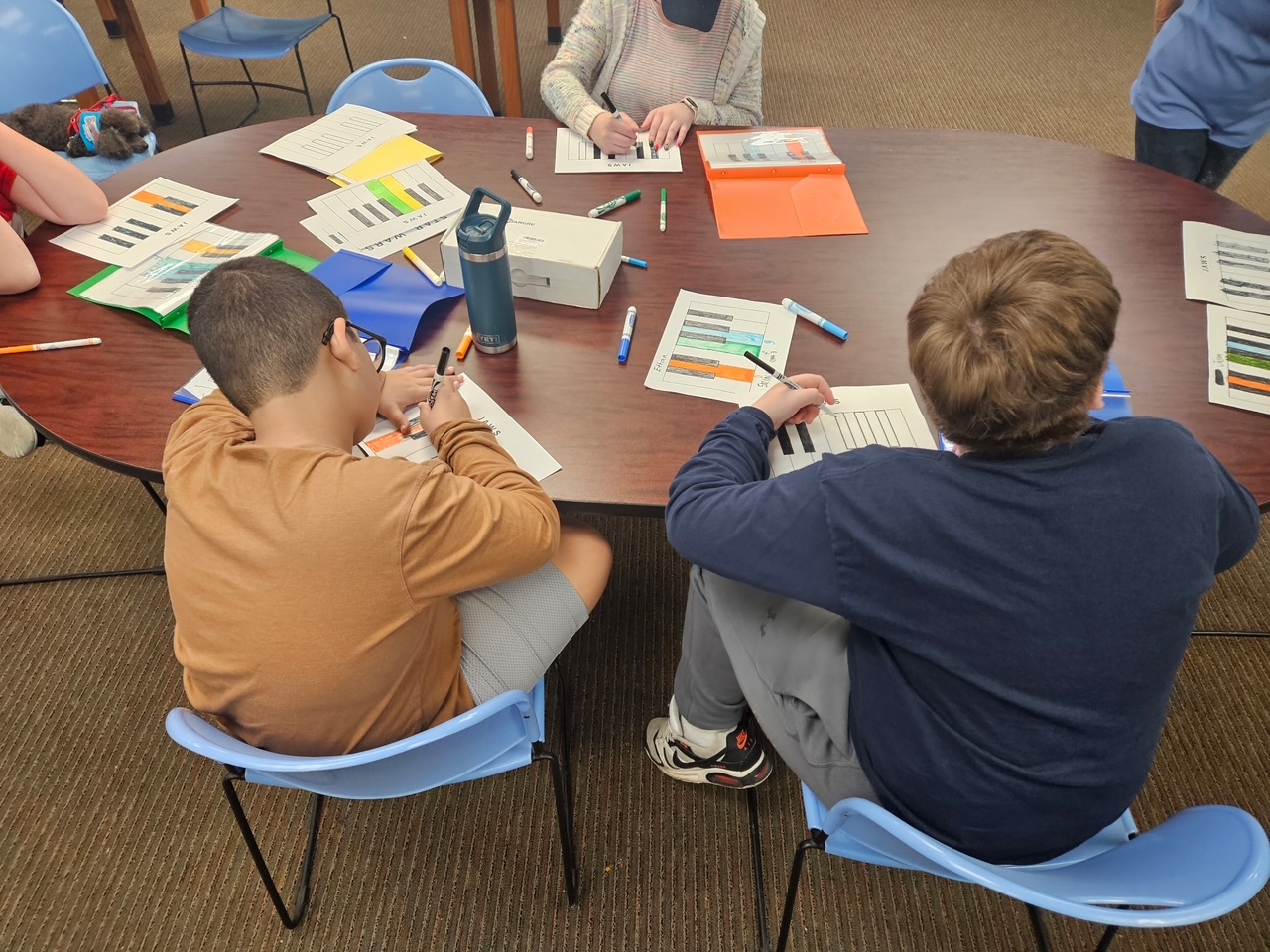
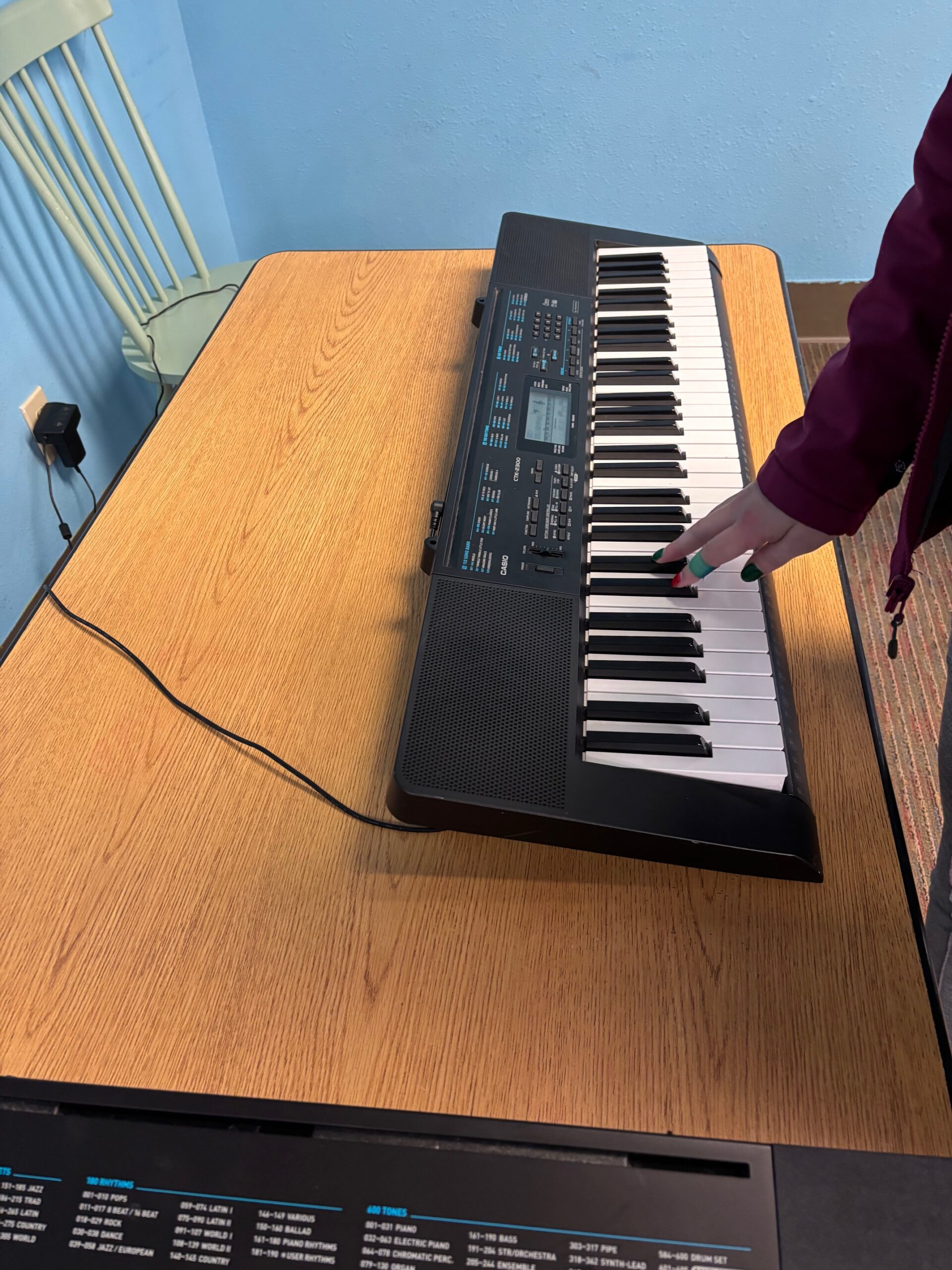
At Lotus Learning Center, the children read to Tiger, or we explore music through handbells or keyboard. Before Christmas, we learned to play short pieces of Jingle Bells, Rockin’ Around Christmas Tree, and Deck the Halls on the bells. We look for patterns on the keyboard and find “D” for the Dog in the dog house made by the two black keys and “F” for the Frog on the low side of the three black keys.
We can improvise on the black keys, keep a steady beat, and listen and play short rhythms in unison. We can play short segments of JAWS, Star Wars, and Harry Potter themes. Tiger sits in a chair and listens when we do keyboard. The students greet Tiger when they come in. We play fetch, and each child gives him a treat.
Written by Hannah Garbett
Puppies are a blast! They have infinite energy for fun and can be an adorable source of endless affection and entertainment. They can also be a lot of work! With fun and games come chewed shoes and late-night potty trips outside.
Let us help you start on the right foot with your new best friend! We’ve compiled some of the best advice from trainers and puppy experts around the country on everything you need to know to be a super puppy parent. From potty training and puppy biting to enrichment and setting expectations, you’ll find the answers to help you survive the amazing and exhausting adventure of raising a canine companion.
The page you requested could not be found. Try refining your search, or use the navigation above to locate the post.
Written by Melissa Bussey Silverman, CDBC, CPDT-KA
Puppies are bundles of energy, and they can get into all kinds of shenanigans! The best way to keep your pup out of trouble is to give him things to do. Physical exercise is important, of course, but so is mental exercise. The more you engage your dog’s mind, the more tired he will be and less likely to pace around the house looking for something to get into. This is especially important if you own a high-energy dog or puppy.
Mental enrichment can come in many forms, from training to exploring to play. Teaching tricks and practicing obedience behaviors can be fun and engaging for both of you. Keep it fun, use treats or toys your dog enjoys as rewards, and unleash your creativity! In addition, learning behaviors such as “stay” and “leave it” require self-control, which can tire out young dogs.
Walks and other activities can be very enriching. Did you know that long “sniffy” walks, where the dog sniffs to his heart’s content, will likely chill your dog out more than a longer walk or a jog? Walks in new places and hikes in the woods on a long line are quite stimulating with new sights, smells, sounds, textures, etc. It’s also more interesting for the human! Other activities might include dog sports such as agility or nose work or supervised dog play with friends.
Another way to increase your dog’s enrichment is to utilize food toys — both for meals and during the day to decrease boredom. Puzzles are wonderful mental exercises! The Kong is a popular food toy that can be stuffed with kibble, canned food, peanut butter, etc. (you can even freeze it to increase difficulty). Other toys are designed for dry kibble or treats, and the dog rolls or bounces the toy to get the food out.
Much of your dog’s food should come from training, a food-dispensing toy, or game (like tossing his kibble all around the backyard or living room so that he has to sniff out each piece) to help tire him out mentally. You can make interactive food toys at home by filling a bottle or container with kibble or treats. But, these should only be given with supervision. Ideas include water and 2-liter bottles, plastic or cardboard milk cartons, cardboard boxes, empty paper towel tubes, etc. Just clean up the cardboard afterward!
Dogs need to chew, and they like novelty, so frequently add new chewies and new toys to their toy baskets. Rotate available toys to keep them interesting. You can also play games like fetch, tug, and hide-and-seek or even make up your own games.
Finally, remember that puppies and young dogs need to sleep — a lot! If your pup has been active for two or more hours and is becoming a handful, he may need to go to his crate for a nap. Put him in there with a stuffed Kong to chew on until he falls asleep. The more outlets your pup gets, both physical and mental, the happier he will be. And the happier YOU will be!
Melissa “Mel” Bussey Silverman, CDBC, CPDT-KA Mel is a Certified Dog Behavior Consultant and Certified Professional Dog Trainer who started Training Tracks in 1998. She has traveled the country studying with the world’s best dog trainers. She runs our Board and Train Program and also specializes in working with fear and dog aggression.
Written by Hannah Garbett
With new puppies come visions of a partner for neighborhood walks, a new playmate for the kids, and a loyal companion to lay at our feet. It can be disappointing and frustrating to realize that puppies aren’t born knowing how to be a well-mannered part of the family. With time and patience, you can help your puppy understand the rules that come with living in a human world.
Having reasonable expectations can go a long way toward helping puppy parents survive the adventure of raising an adolescent dog. Remember that puppies grow up fast! Before you know it, your bouncing baby puppy will be a full-grown best friend.
Kids and puppies seem like a match made in heaven. Often, though, kids and puppies don’t mesh until the puppy is much older. Running and playing kids can look like human squeaky toys to bitey puppies. Kids can be disappointed to learn they can’t play with the puppy every time they want to because puppies need time to sleep and decompress, too. Create clear expectations by setting up specific puppy downtime areas using gates or exercise pens to give everyone some much-needed personal space.
Puppies are so cute! They look like they would make excellent snuggle buddies. Unfortunately, when you want to snuggle, your puppy may be more interested in using your hand as a chew toy. Puppy biting is a totally normal and natural behavior, but that doesn’t make it less painful. With patience and training, puppies can be taught that a hand near them is a cue for calm interactions and learn to direct their biting to more appropriate outlets. This process takes time and lots of management; having realistic expectations can help everyone survive the “baby shark” stage.
Puppies are so small; how much damage could they actually do? Many new puppy parents are surprised when their puppy routinely chooses to chew on furniture and human possessions instead of the plethora of puppy toys scattered around the house. Puppies have a biological need to chew and are indiscriminate when exercising this need. Set them up for success by using gates, exercise pens, and crates to create puppy-proofed areas of your home. Rotating chew toys and using food-stuffed puzzle toys helps create more interest in appropriate chew items and will help you survive puppy teething without too much property damage.
Puppy parents often have visions of long relaxing walks or fast and focused runs with their new furry exercise partner. However, the socialization and exercise needs of puppies are quite different from adult dogs. Don’t expect to cover a lot of ground on your puppy walks; slow and steady is best for puppy socialization. Puppies need positive experiences with the outside world, and sometimes this means just sitting and watching all there is to see! Most puppies learn quickly to follow their owners on leash with positive reinforcement, but they still need time to sniff and explore to learn about the world around them. Lastly, all puppies like to pick things up with their mouths, so it’s important to come prepared with treats and practice lots of “trades” to avoid frustration.
Hannah is an Associate Certified Dog Behavior Consultant through the International Association of Animal Behavior Consultants (IAABC) as well as a Fear Free Certified Dog Trainer. Hannah owns and operates The Proper Puppy, which helps owners live easier, happier lives with their canine family members.
Written by Ashley Johnson, KPA-CTP
Most puppies struggle with puppy biting at some point, and while biting is a natural and normal behavior, those little puppy teeth hurt! Calmly and consistently directing puppies to appropriate toys and chews is the most efficient way to curb biting once it begins. However, you can minimize biting overall by meeting their needs and by using smart management to keep them out of trouble while they mature. Follow along with this puppy biting checklist to reduce biting from the get-go.
Dogs need a mix of high-stimulation and low-stimulation exercise. High-stimulation exercise like fetch, chase, and play wears their bodies out but can make some puppies overexcited and bitey. Low-stimulation exercises like sniffing walks and hikes fatigue puppies and may result in an extra calm pup. Watch your puppy and check with your vet to know what’s right for your dog.
Mental exercise (enrichment) is any activity that helps replace behaviors that dogs would do when left to their own devices. It’s a way to satisfy your pup’s instinctual needs. Common examples include training, sniffing unique smells, searching for treats, gnawing on chews, licking wet food out of a toy, and shredding boxes or toys. Choose safe enrichment for your pup, and they will feel satisfied and ready to relax.
While most dogs are physically ready for two meals a day relatively young, many puppies need a midday snack or chew to keep from getting “hangry.” If your puppy is extra bitey in the afternoon, divide their daily food into three meals instead of two. Puppies can also continue teething after their puppy teeth fall out and their adult teeth come in. Make sure puppies under 1 year old have plenty of yummy or cold chews for teething.
Puppies who fall fast asleep after a big biting episode were likely over-tired and lacked the ability to play nicely. Additionally, when play escalates and becomes too exciting, many dogs will become over-aroused and lose the ability to keep their mouth to themselves. In both cases, help them settle down and rest with some home management. Management options include leashing or tethering away from the family or separating them with a playpen or crate. Be sure to provide them with some enrichment if they aren’t going to fall asleep right away.
Occasionally, what we think of as play biting is actually defensive biting where the puppy is trying to get us to stop something. They may want us to stop petting them, stop playing in an uncomfortable way, or stop approaching their prized possession. To reduce these episodes, pay attention to early signs of discomfort like turning away from you or freezing their body. Because this type of biting can get worse without assistance, be sure to contact a certified professional trainer for a training plan. If you work through this checklist and your puppy is still biting, use your home management to keep them out of trouble, and contact your trainer for more personalized help. This information can be found at www.WhatAGreatDog.com/puppy-biting. Remember, while puppy biting is temporary, your relationship with your puppy is lifelong. Enjoy your puppy’s unique personality and watch them learn and mature!
Ashley is the Head Trainer for the Pet Manners program at What A Great Dog! Training Centers. She holds a Bachelor’s Degree in Painting and Drawing from the University of North Texas and is a Karen Pryor Academy Certified Training Partner. She enjoys teaching people and training with her Border Collie Bee.