Tiger’s Story
Written by Kay Graves
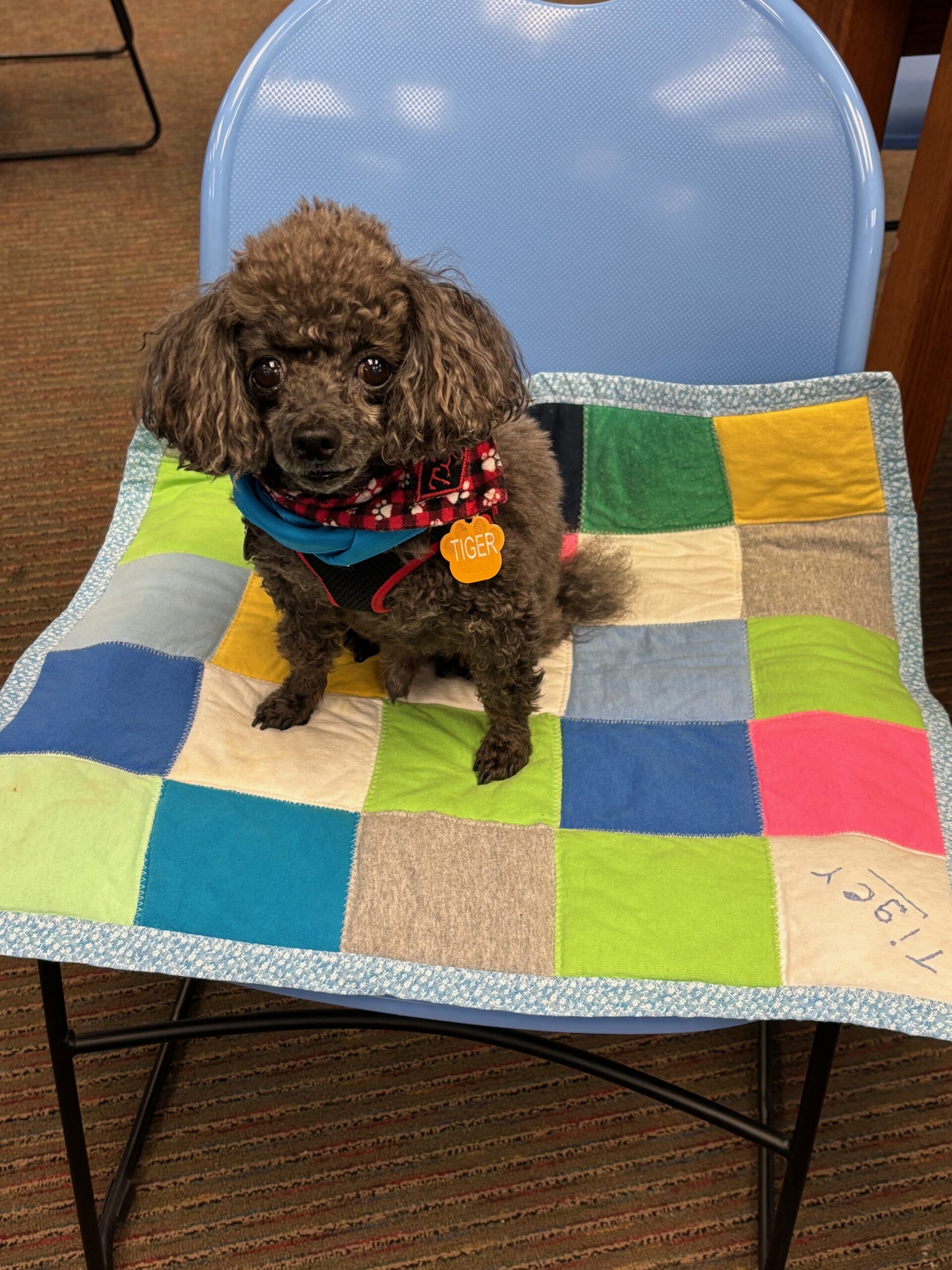
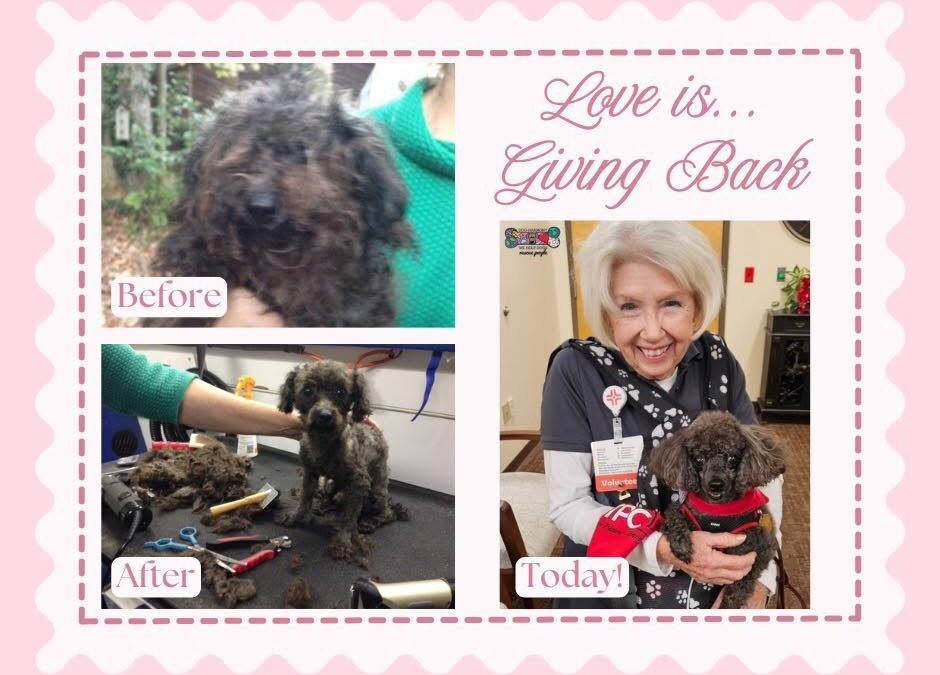
We rescued Tiger in 2015 at Our Pal’s Place in Marietta, GA. He was approximately one year old. I had two older dogs at the time. Had it not been for Charley’s loving care, I am not sure Tiger would have made it. It took about 2 years for Tiger to adjust (calm).
We trained with Dog-Harmony to become a therapy dog team. We now volunteer at HCA Florida Fort Walton-Destin Hospital and Lotus Learning & Arts Center. We walk with the Dog-Harmony’s therapy dog teams at HCA and greet staff and patients.
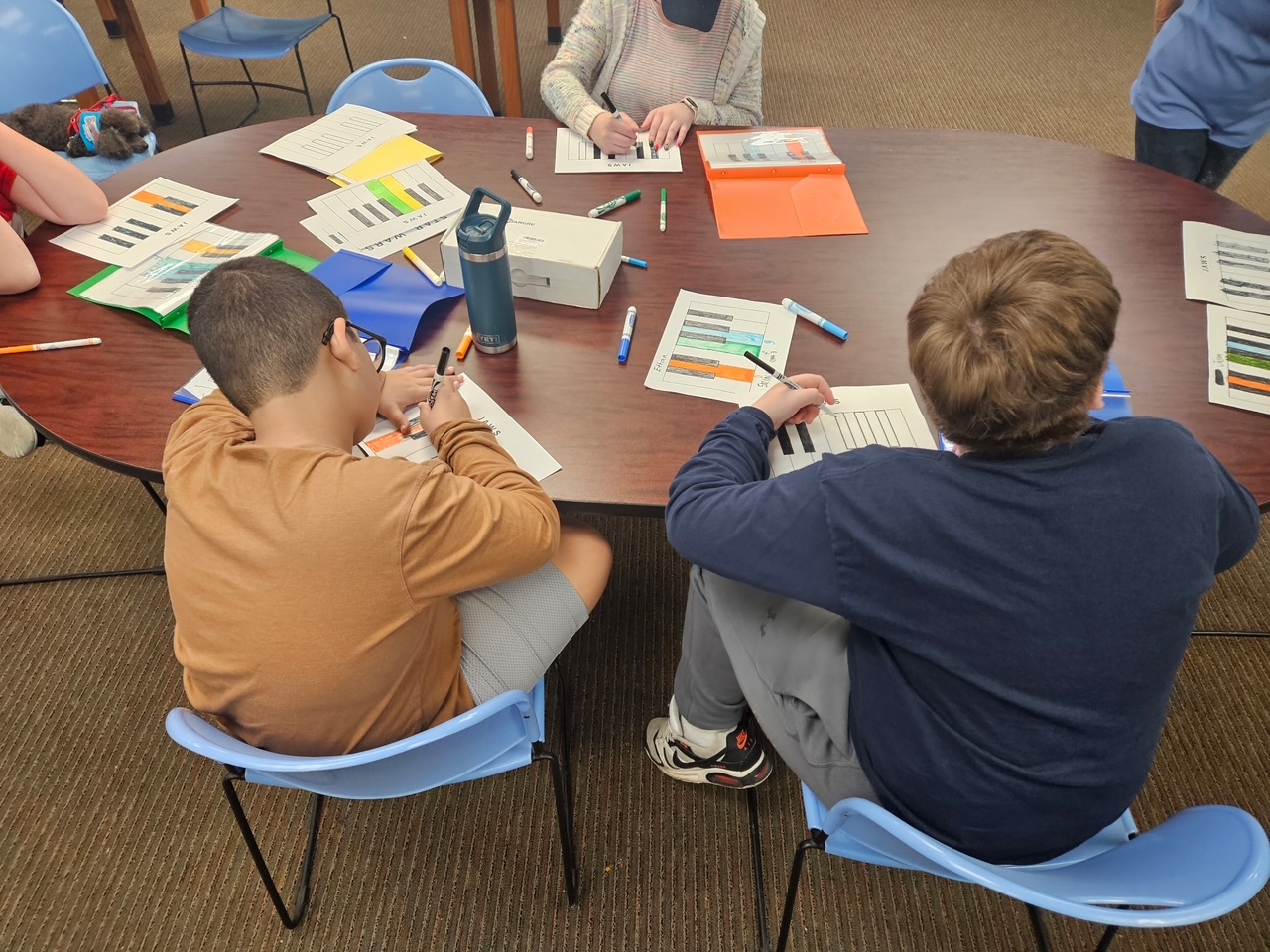
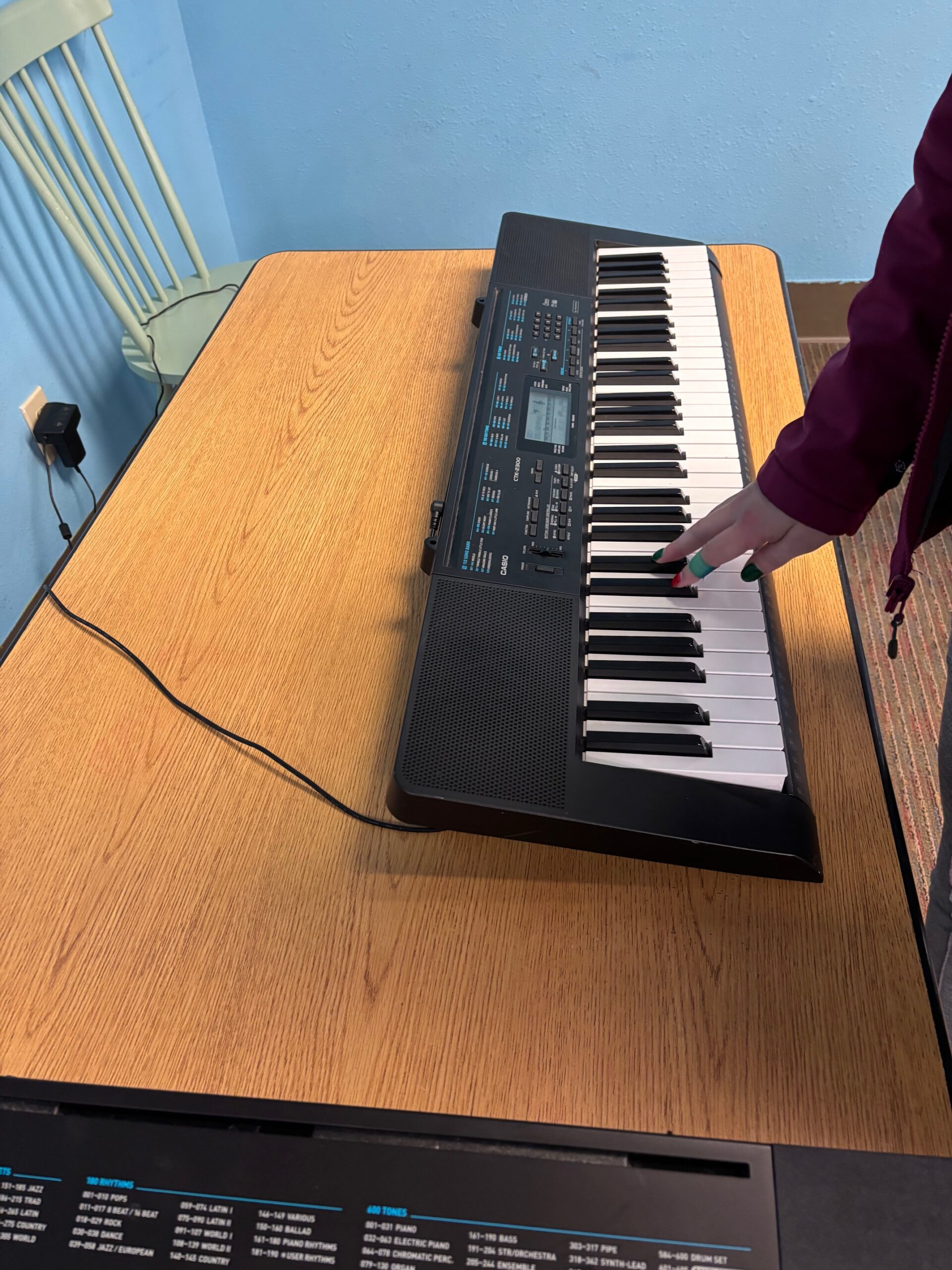
At Lotus Learning Center, the children read to Tiger, or we explore music through handbells or keyboard. Before Christmas, we learned to play short pieces of Jingle Bells, Rockin’ Around Christmas Tree, and Deck the Halls on the bells. We look for patterns on the keyboard and find “D” for the Dog in the dog house made by the two black keys and “F” for the Frog on the low side of the three black keys.
We can improvise on the black keys, keep a steady beat, and listen and play short rhythms in unison. We can play short segments of JAWS, Star Wars, and Harry Potter themes. Tiger sits in a chair and listens when we do keyboard. The students greet Tiger when they come in. We play fetch, and each child gives him a treat.