
Puppies are bundles of energy, and they can get into all kinds of shenanigans! The best way to keep your pup out of trouble is to give him things to do.
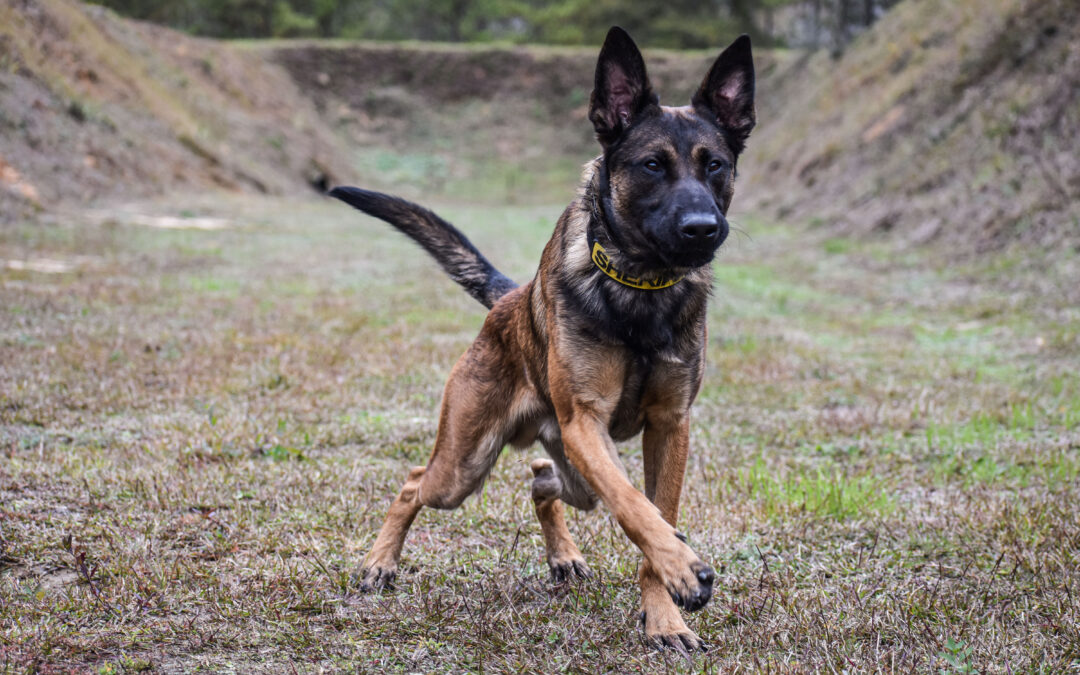
The Bond at Its Best: Getting to Know Walton County, Florida’s K-9 Teams
Written by Christie Solomon | Photography by Christie Solomon and Courtesy of WCSO
Originally Published in Dog-Harmony Life Fall 2021 Issue
We were surrounded by three Sheriff’s Deputies with three highly trained K-9s, a Lieutenant, and a Public Information Officer from Walton County’s Sheriff’s Office. After the fear dissipated, we were able to get a sense of these amazing K-9 teams’ unique personalities and their roles through off-leash demonstrations. We had not expected the depth of the connection and bond between the dog and its handler.
Each of the three K-9 handlers in the Walton County Sheriff’s Office (WSCO) individually selected their canine partners as young dogs and have trained them from the beginning. The breeder is instrumental in the K-9 selection process to ensure the dogs have the appropriate temperaments to perform their duties.
K-9 Jester
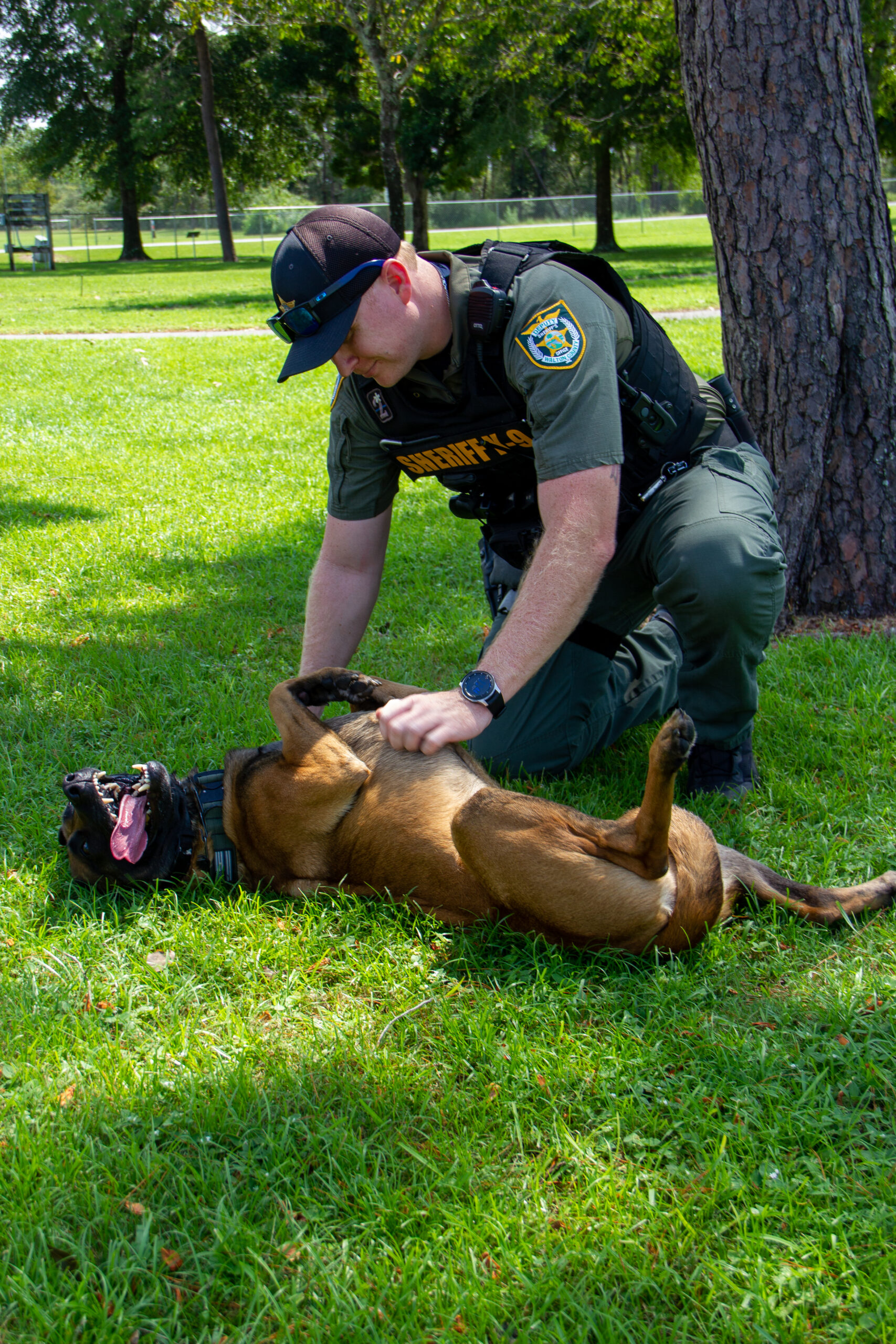
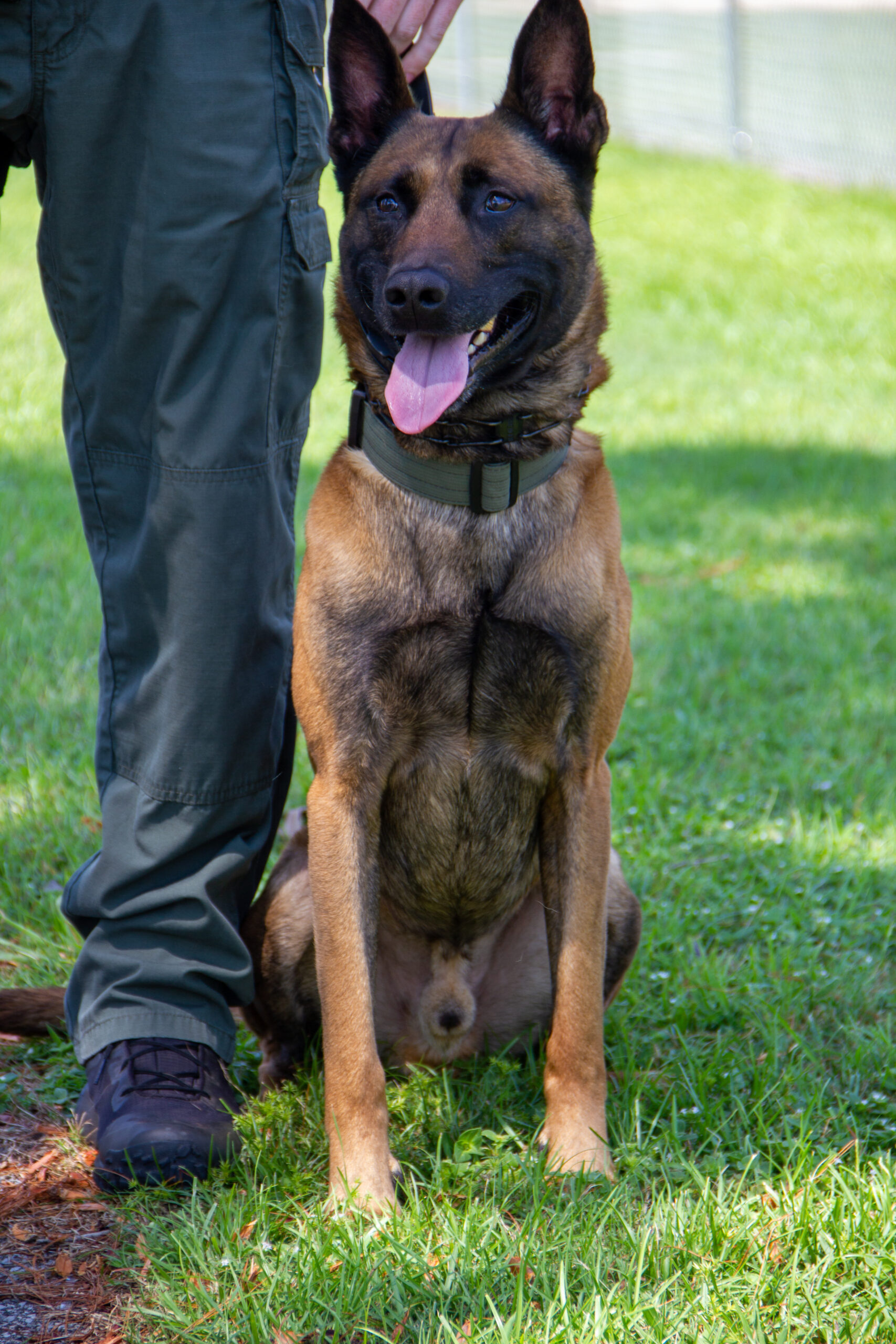
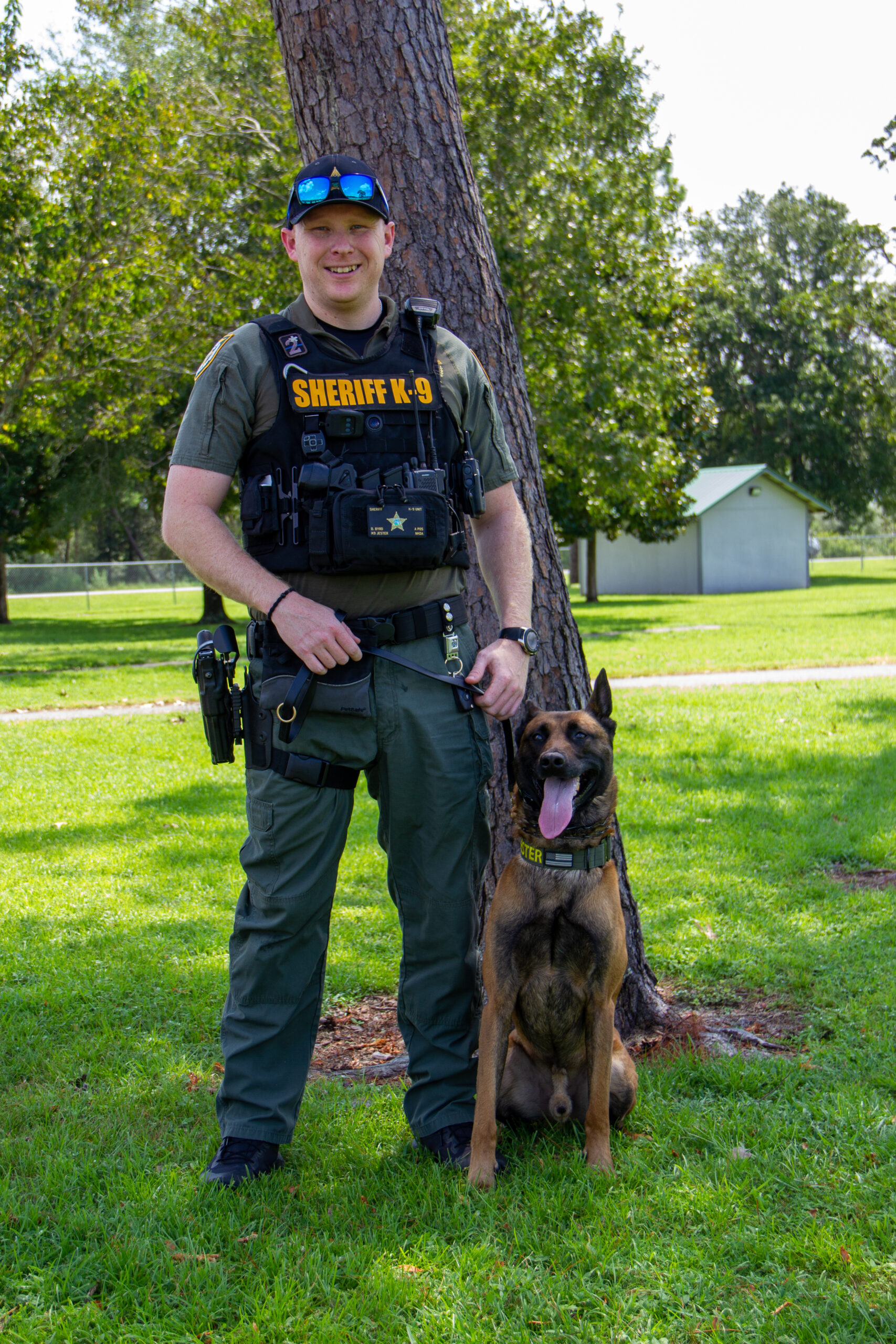
Jester is a Belgian Malinois born in May 2016 in the Netherlands and is the most tenured of the WCSO K-9s. Jester began his career with the WCSO in September 2017 with senior handler Deputy Damon Byrd.
Byrd traveled to Oxford, Florida, and selected Jester as his K-9 partner from Police Service Dogs, WCSO’s vendor/breeder. Jester is a dual-purpose working dog certified in narcotics detection and patrol through both the Florida Department of Law Enforcement (FDLE) and United States Police Canine Association (USPCA).
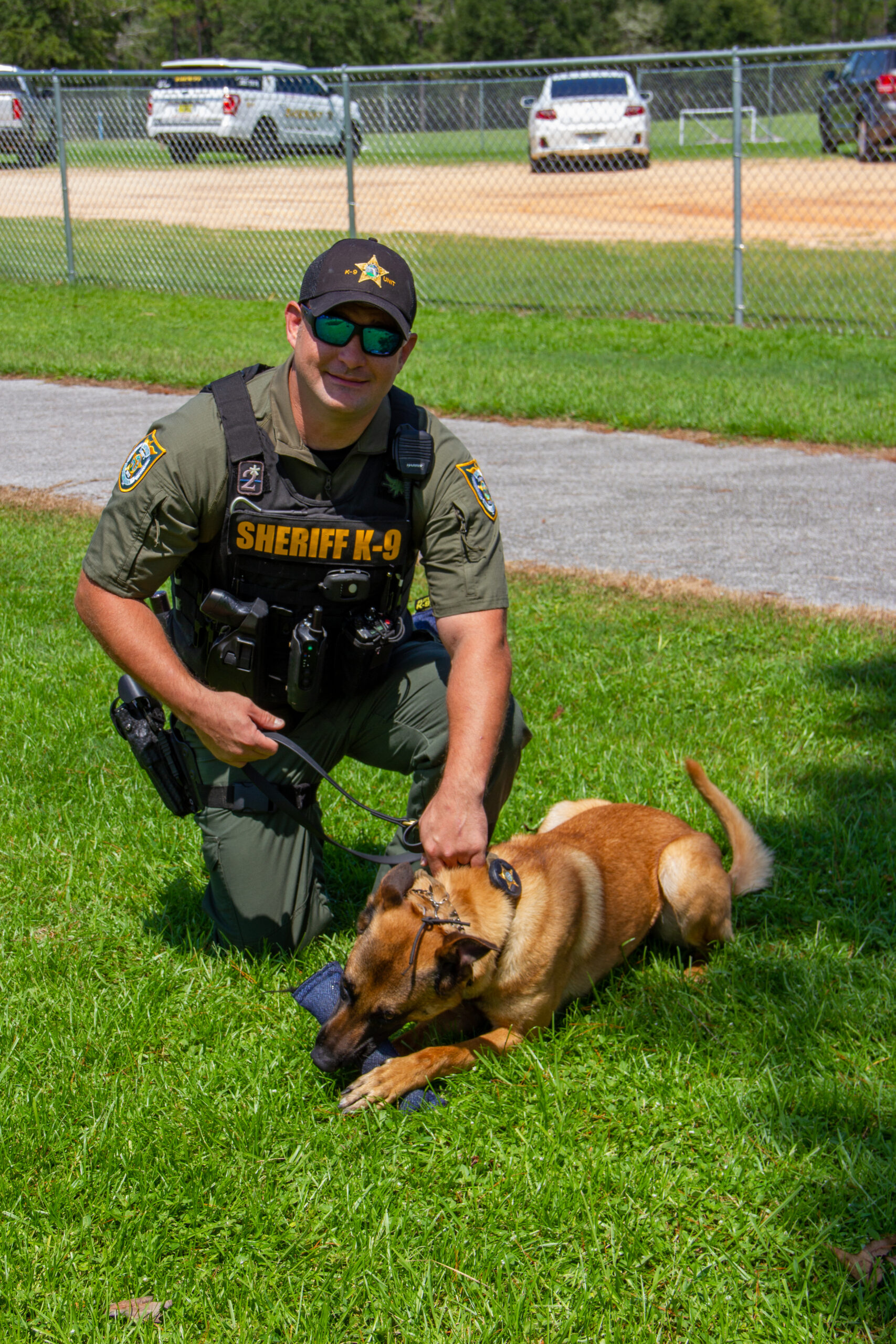
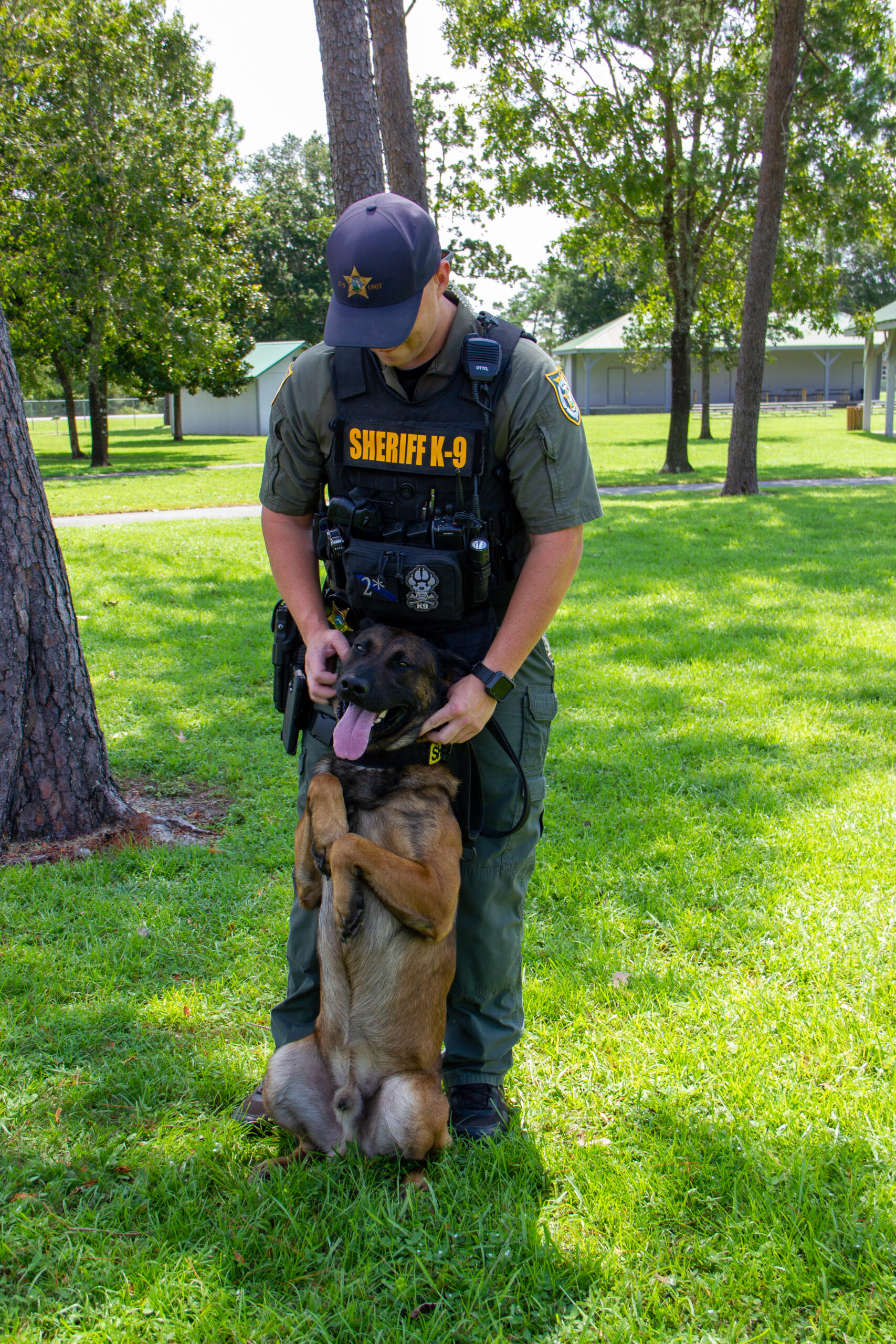
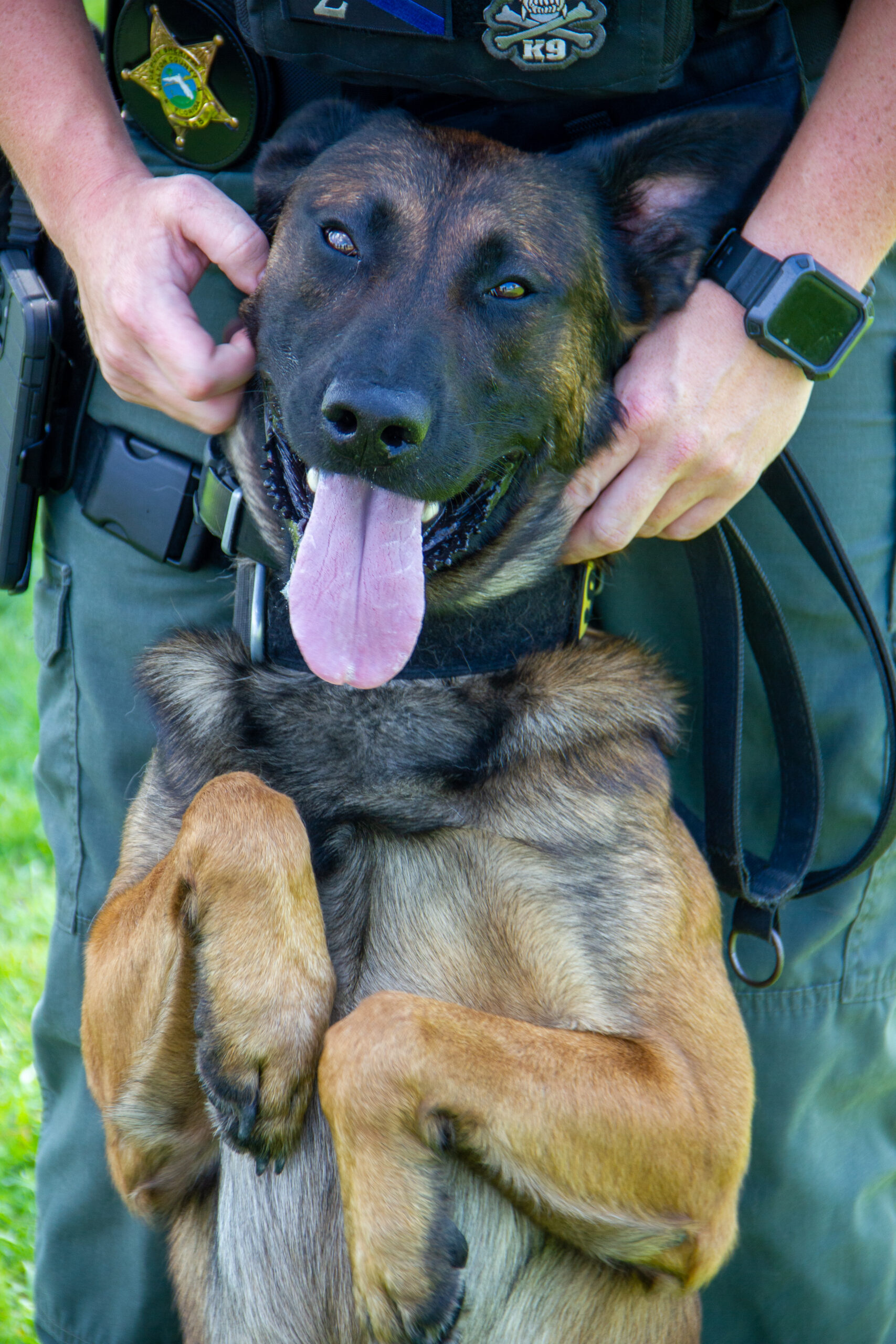
Byrd and Jester gave the group an off-leash demonstration of Jester’s abilities. Jester, completely in-tune with Byrd, responded almost instantaneously to both hand signals and verbal cues in Dutch. Byrd rewarded Jester with high-quality kibble after each response. After Jester gave an impressive performance of his abilities, he rolled over for a smile from Byrd and a well-deserved belly rub.
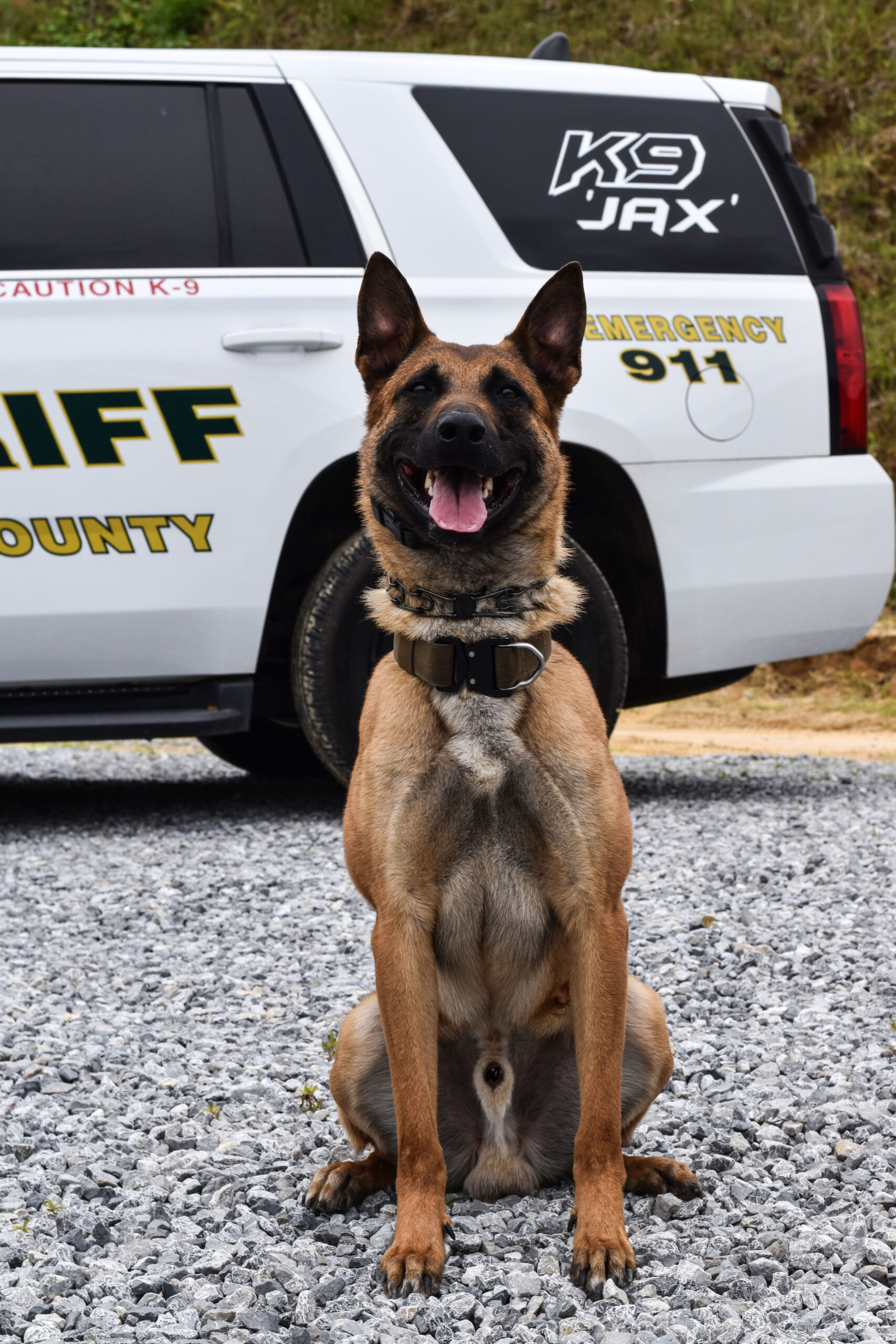
“Jester has been on the road for the longest, then Colt, and then Jax. Jester is completely obsessed with Deputy Damon Byrd. He will listen to Damon and do whatever is requested of him because they’ve been together the longest. Colt is the second most tenured, followed by Jax, a nearly two-year-old Belgian Malinois. Jax is demonstrating a high drive and is still learning a lot in his first year with handler, Deputy Steven Tector.”
– Corey Dobridnia, Public Information Officer, WCSO
(We did notice that Jax was very skilled at pulling not one, but two, chew toys out of Deputy Tector’s pockets.)
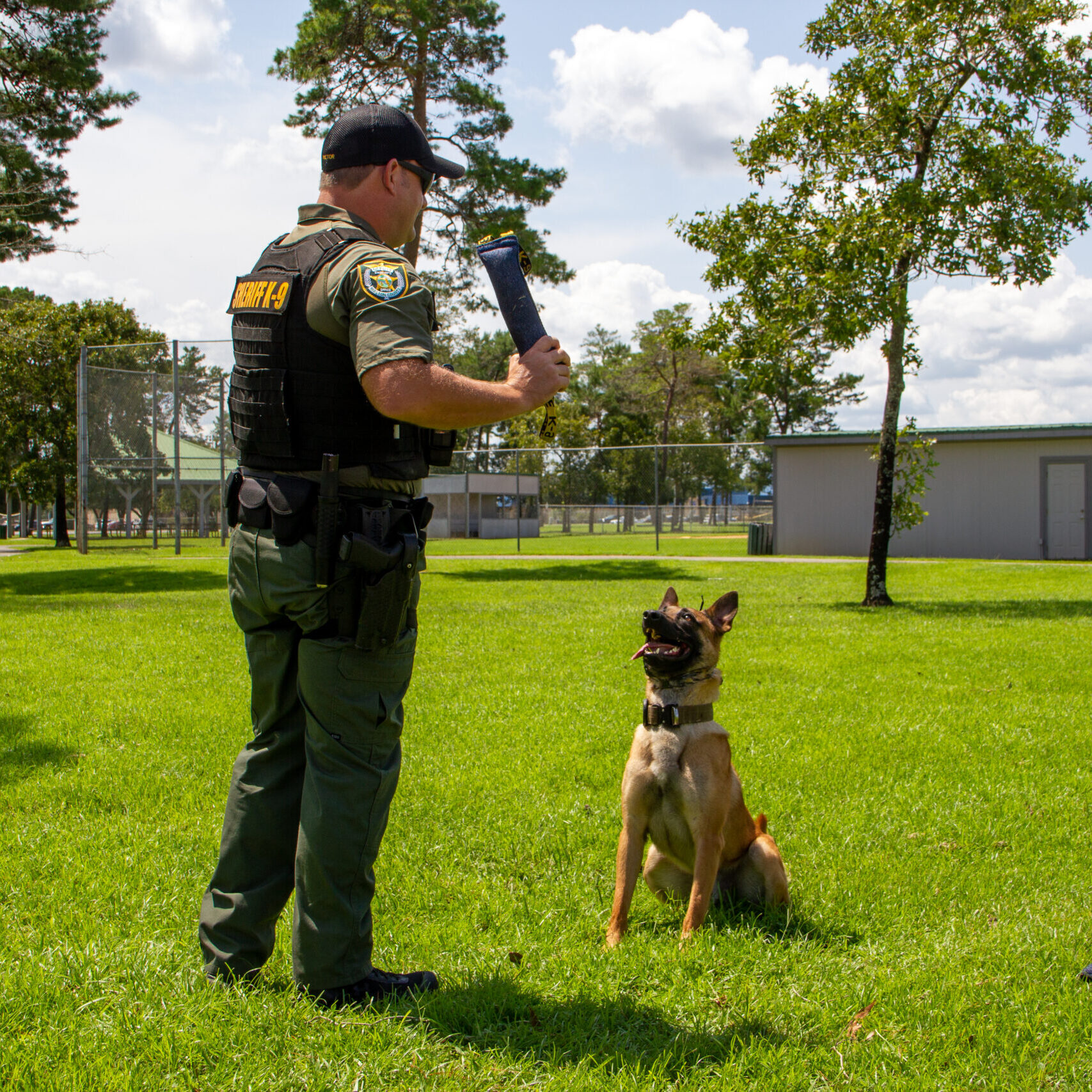
Jax is a Belgian Malinois born in Hungary in December 2019 and a multi-purpose K-9 officer at the WCSO. He is certified in narcotics detection, criminal apprehension, tracking, and evidence/article recovery.
As the newest member of the K-9 Unit, Jax completed the FDLE’s 480-hour Basic Patrol K-9 Handler Course in May 2021 with Deputy Tector.
This highly trained, good-looking pup who’s on standby to work enjoys a game of fetch in his downtime. If you’re lucky enough, this large dog will catch you off-guard by a not-so-subtle body lean, which is his way of displaying affection.
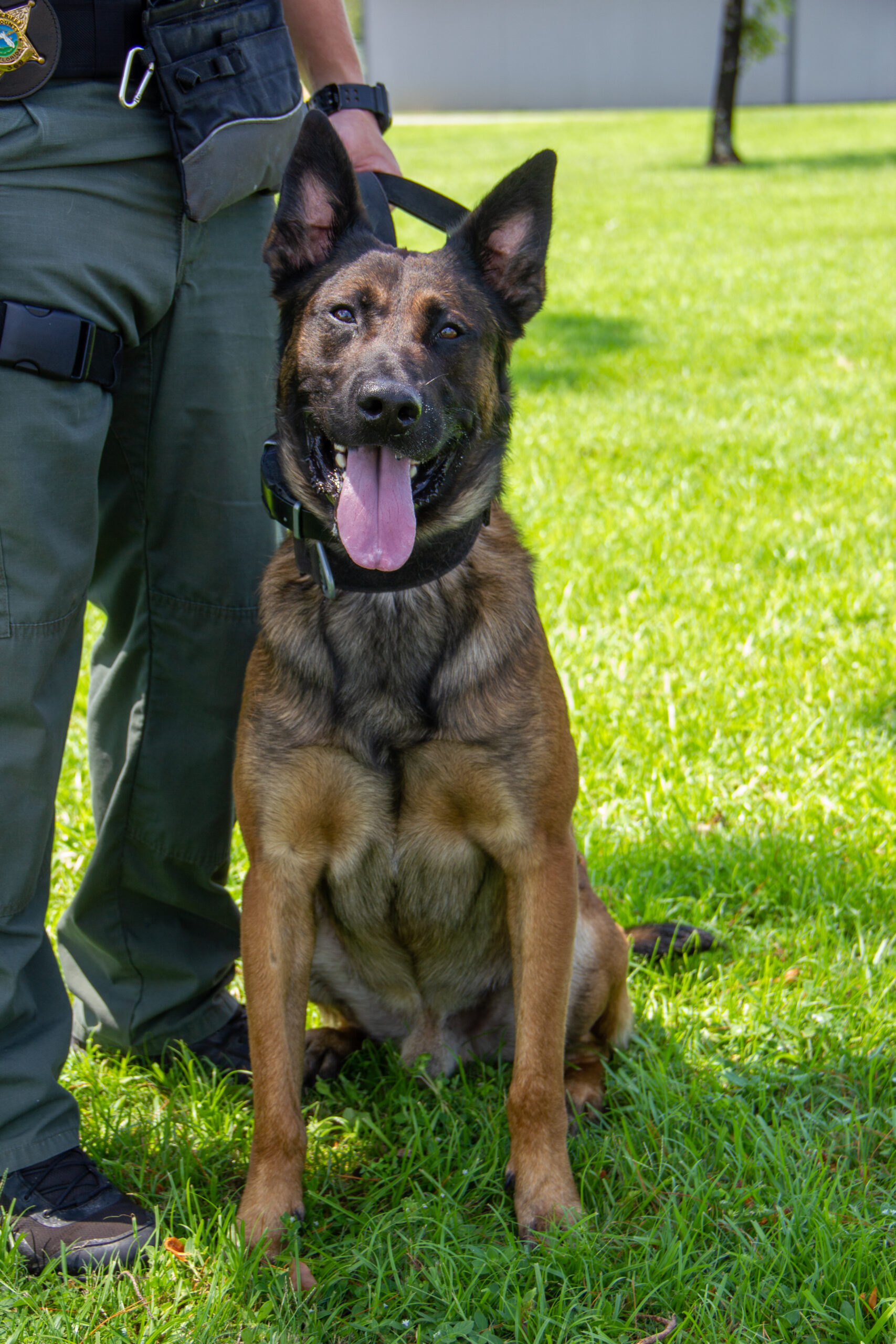
K-9 Colt
Colt is a single-purpose Belgian Malinois/Shepherd mix born in the Netherlands and certified in narcotics detection through the USPCA.
Deputy John Avery selected Colt as his partner and welcomed him into his home and family, which includes two small children.
Explaining the selection process for Colt’s role at the WCSO, Avery said, “his only job is to find drugs. Knowing that, we not only wanted to select a dog great at scent detection, but also great with kids and people in general. We wanted a very social dog.”
Like Jax, Colt has a fondness for chew toys and knows exactly which of Avery’s pockets to pick.
The Training
Reward-based training is the main methodology utilized by the WCSO K-9 Unit. This training approach builds trust and a strong bond between the handler and the canine for effective police work. According to senior handler, Deputy Damon Byrd, “our dogs have never eaten out of a dog bowl. We reward them with food out of our hands every time they do something good.”
“When we teach evidence and article recovery, we use kibble on our tracks. In order to accelerate their food drive a little bit, we’ll microwave little hot dogs. That scent alone puts them into overdrive.” – Deputy Byrd
Byrd said that, “outside of apprehension work, we don’t activate electronic collars on our dogs. We make eye contact and mainly use verbal cues and hand signals.” When the K-9 Unit is in a SWAT situation, the handlers may not have a visual on the dogs or be able to call them. Electronic collars are used in these situations only with a subtle vibration to discreetly cue the dogs. Speaking proudly about his K-9 partner, Byrd said, “Jester has never failed to engage” a suspect.
According to Byrd, prong collars are used only as a last resort, a correctional tactic when the dogs are working. Dog-Harmony believes electronic and prong collars should not be used on your average companion animals, who are not working animals paired with highly skilled handlers.
After a hard day’s work, all three of the K-9s, Jester, Colt, and Jax, sleep at home with their handlers. Rumor has it that one of these clever canines even shares the bed with his handler at night. The off-duty time at home not only serves as a time for the pair to bond, but also allows the K-9 Unit to respond to calls more quickly. Interacting with these three dogs and their handlers, who all failed to hide smiles when looking at their K-9 partners, revealed the deep level of respect and affection each of these pairs has for each other.
What’s Next?
On September 1, 2021, Lieutenant Scott Hogeboom took responsibility for the K-9 unit. (Coincidentally, Lt. Hogeboom is married to the Commander of Walton County’s Animal Services division, which Dog-Harmony supports with its Shelter Enrichment Program.) Hogeboom plans to add additional K-9s to the WCSO unit as funding is made available.
Santa Rosa County, which is located nearby in the northwest panhandle of Florida, covers a territory similar in size to Walton County (~1,200 mi2). These counties span the Gulf Coast to the southern border of Alabama. The Santa Rosa County Sheriff’s Office currently has thirteen working dogs (versus the three at the WCSO).
A $40,000 donation to the WCSO K-9 Unit from the Sassy Sister Women’s Club of Santa Rosa Golf & Beach Club in April 2021 will go towards additional training, equipment, and even dogs for the WCSO. Each new K-9 costs an average of $20,000. In addition, the K-9 teams require special equipment, as well as a vehicle equipped for K-9 transport, food, and medical care while in service. Bluewater Bay Animal Hospital, which cares for the dogs during their career, also continues to cover medical expenses for retired K-9s, all of whom have been formally adopted by their handlers. The initial cost for adding a K-9 to the agency’s team is $80,000 to $100,000.
Our area needs to support the growth and training of this highly skilled K-9 Unit. To donate or to learn more about how you can help the WCSO K-9 Unit, please contact Corey Dobridnia, Public Information Officer of the WCSO (at 850-951-4759 or cdobridnia@waltonso.org). If you’re not a resident of Walton County, consider contacting your local county’s Sheriff’s Office to see how you can get involved.

Mailing Address:
107 Surfsong Ln, Unit B2
Miramar Beach, FL 32550
Dog-Harmony is a 501(c)(3) dedicated to reducing the shelter population through ongoing community education and programs that enrich the human and animal bond.
©2015-2025 Dog-Harmony, Inc. | 501(c)3 Charitable Education Non-Profit | Privacy Policy | Powered by Creative Web Solutions